 Matzav
Related stories

 Yeshiva World News8 hours ago
 Vos Iz Neias9 hours ago
 Matzav7 days agoMatzav16 days agoMatzav4 hours ago
With the Memorial Day weekend approaching and the busy summer driving season about to begin, rising gasoline prices are emerging as a potential political challenge for President Donald Trump and Republicans heading into the November midterm elections. Analysts warn that unless tensions in the Middle East ease, fuel prices in the U.S. could climb to record levels.
According to GasBuddy, the national average price for gasoline reached $4.52 per gallon as of Tuesday evening. Prices first crossed the $4 mark in late March, a level not seen since August 2022 following Russia’s invasion of Ukraine.
Prices vary significantly by region, with California posting the highest statewide average at $6.14 per gallon, GasBuddy reported.
The spike in gasoline prices has followed a sharp rise in crude oil markets, driven largely by concerns over disruptions in the Persian Gulf. The global Brent crude benchmark has increased by 58% since the conflict began.
“The Strait of Hormuz shutdown continues to slowly push oil and gasoline prices higher, but we’ve also seen refining issues that have enhanced some of those increases,” GasBuddy analyst Patrick De Haan said.
Additional supply pressures emerged last week when BP’s refinery in Whiting, Indiana—capable of processing 440,000 barrels per day—temporarily shut down part of its operations due to a power outage. The company later confirmed that operations had resumed.
“If the Strait of Hormuz does not open, I would expect that gas prices this summer would probably stay above $4.50 a gallon,” De Haan said.
Before the U.S. and Israel launched strikes on Iran on February 28, roughly 20% of the world’s oil supply passed daily through the Strait of Hormuz, making it a critical chokepoint for global energy markets.
Morgan Stanley analysts noted that U.S. gasoline inventories are being depleted more quickly than usual for this time of year. Their projections suggest stockpiles could drop below 200 million barrels by late August, approaching historically low summer levels.
Government data showed that U.S. gasoline inventories declined by more than 6 million barrels last week, bringing total stocks to 222.3 million barrels as of April 24—the lowest level since December and more than 2 million barrels below the five-year seasonal average. Meanwhile, demand averaged 8.95 million barrels over four weeks, reflecting a 1% increase compared to the same period last year.
Morgan Stanley added that consumer demand has remained steady even with prices above $4 per gallon. “It is not driving the draws but it’s also not soft enough to slow the supply-driven stock draws.”
U.S. gasoline futures were trading at approximately $3.64 per gallon.
Related stories
Yeshiva World News8 hours agoVos Iz Neias9 hours agoMatzav7 days agoMatzav16 days ago
 Yeshiva World News
Related stories
 Yeshiva World News22 days ago
 Yeshiva World News28 days ago
 Yeshiva World News1 month ago
 Yeshiva World News1 month agoYeshiva World News5 hours ago
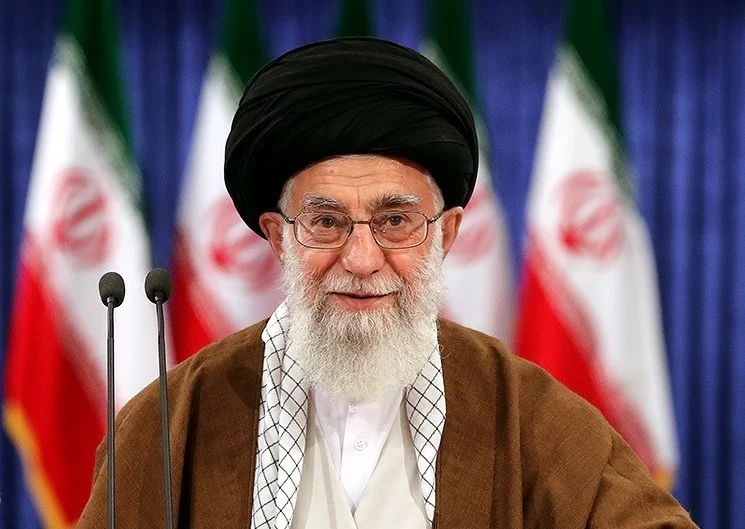
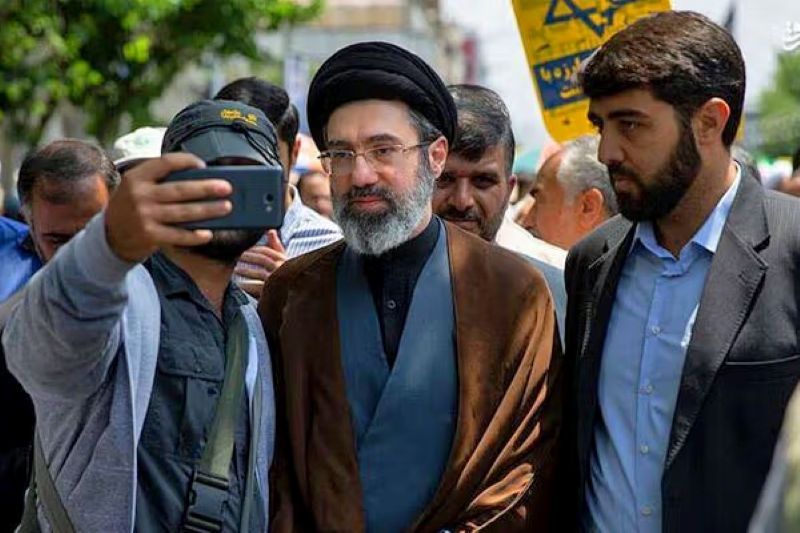
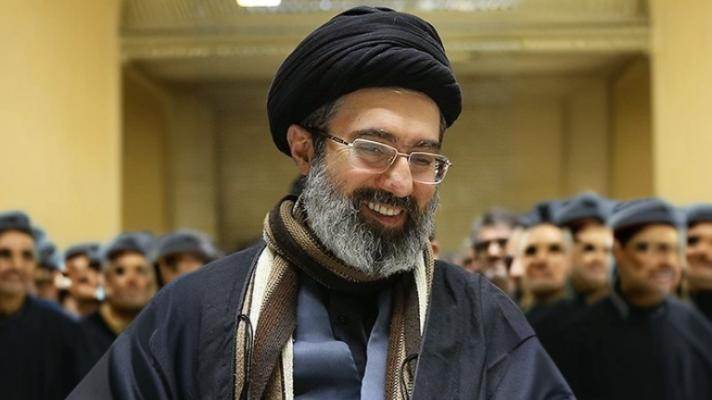
Growing uncertainty surrounding Mojtaba Khamenei is fueling speculation about who is effectively running Iran, according to a report by The Jerusalem Post.
Dr. Thamar Eilam Gindin said in a radio interview that conflicting information has circulated for weeks.
“Whether Mojtaba is well is a question we have been asking since February 28,” she said. “The answer changes with every leak. Rumors that he is dead are multiplying, which is what many thought from the beginning.”
Speculation intensified after a ceremony in an Iranian city honoring “martyrs of the war,” where Mojtaba’s photograph was reportedly displayed among the images.
Gindin noted that Mojtaba’s role has long been unofficial and unclear.
“There is a group, and it is not clear who they are, that says things in Mojtaba’s name and uses him as legitimacy for the decisions they make,” she said.
She described what has been referred to as Iran’s “deep state,” adding that it remains unclear who is part of it, how it operates, or who is ultimately making key decisions.
(YWN World Headquarters – NYC)
Related stories
Yeshiva World News22 days agoYeshiva World News28 days agoYeshiva World News1 month agoYeshiva World News1 month ago Matzav
Related stories
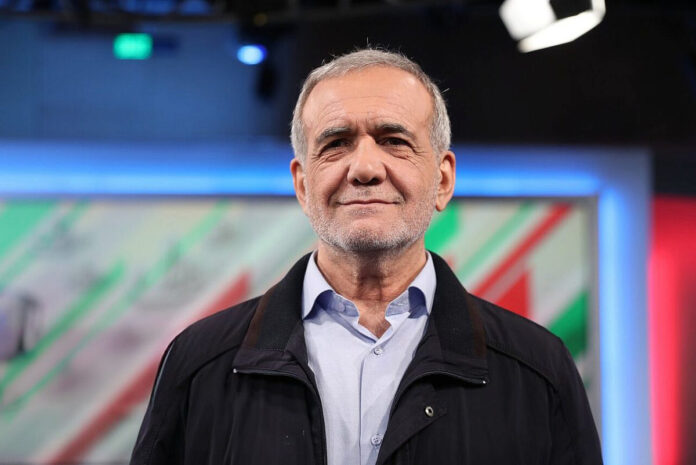
Matzav5 hours agoIranian President Masoud Pezeshkian has privately acknowledged to close associates that the country’s economy is on the brink of total collapse, warning that even if international sanctions are lifted, billions of dollars in American assistance would still be required to stabilize the nation, according to a report aired Tuesday evening.
The remarks, reported by Channel 14, reveal a far more dire reality behind the scenes in Tehran than what is publicly presented. Pezeshkian, who is associated with Iran’s reformist camp, reportedly expressed deep concern about the country’s future, stating that key systems have already broken down and that rebuilding them would be extremely difficult even under improved conditions.
“Without American assistance – we will not recover”
According to the report, the Iranian president told those close to him that the only viable path out of the severe economic crisis is reaching a political agreement that would allow for active financial support from the United States. Without such aid, Pezeshkian warned, Iran will be unable to recover from the economic damage it has suffered in recent years.
His comments come amid growing internal tensions within Iran’s leadership. Senior figures in the Islamic Revolutionary Guard Corps and hardline factions are reportedly pushing for increased military escalation against Western and regional powers. At the same time, Pezeshkian and his allies have attempted to restrain such moves, fearing the economic and international consequences. These divisions have become more visible in connection with recent attacks in the United Arab Emirates, where competing approaches within the leadership have come to the surface.
Deepening Rift in Iran’s Leadership
The president appears to recognize the severity of the country’s economic situation and is signaling that without a significant shift in foreign policy and improved relations with the West, Iran will struggle to survive economically in the long term. The country has been grappling for an extended period with soaring inflation, high unemployment, and a sharp decline in the value of its currency, all of which have fueled social unrest and protests nationwide.
Reports from Iran International indicate that Pezeshkian and Parliament Speaker Mohammad Bagher Ghalibaf are working together in an effort to remove Foreign Minister Abbas Araghchi from his position. The two accuse Araghchi of acting as a subordinate to Islamic Revolutionary Guard Corps commander Ahmad Vahidi and of taking direct instructions from him regarding negotiations over Iran’s nuclear program, bypassing the authority of the president.
U.S. Sanctions Taking a Heavy Toll
The American sanctions campaign appears to be having a significant impact. According to reports, Iran has been forced to return aging oil tankers—some decades old—to active service in order to cope with a growing storage crisis. One tanker, 29 years old and long inactive, has reportedly been redeployed near Kharg Island, the country’s main oil export hub.
President Donald Trump described Iran’s economic condition in stark terms: “The naval blockade, to a certain extent, is more effective than the bombings. The Iranians are choking – like a fat pig. And it’s going to get worse for them.”
His comments come as the United States and Israel continue close security coordination regarding potential actions against Iran.
President Calls for Immediate Energy Cuts
Amid the worsening economic situation, Pezeshkian has also issued an unusual direct appeal to the Iranian public, urging citizens to immediately reduce electricity and energy consumption. While officials have publicly claimed there is no current shortage in Tehran, the president indicated that the country’s infrastructure is under deliberate attack by the United States and Israel.
Pezeshkian’s statements suggest that even at the highest levels of Iran’s leadership, there is a growing recognition that the situation has reached a critical point, and that without major external intervention, the country lacks the economic tools necessary to halt its continued decline.
{Matzav.com}
 Matzav5 hours ago
Israeli police have recommended that prosecutors file serious homicide charges against the driver accused of fatally striking 14-year-old Yosef Eisenthal z”l during a protest in Yerushalayim, according to a report aired Tuesday evening on i24news.
Authorities say the driver, Fakhri Khatib, 49, of East Yerushalayim, should be charged with causing death intentionally or through extreme indifference, one of the most severe categories of homicide offenses under Israeli law.
The recommendation was submitted to the Yerushalayim District Attorney’s Office following the conclusion of a months-long investigation that included witness testimonies, video footage, and forensic evidence. Prosecutors will now review the material before deciding whether to file an indictment. Additional offenses attributed to the driver include assault causing injury and reckless driving.
Newly released footage from the moments leading up to the incident sheds light on the chaotic scene prior to the fatal collision. The video shows Yosef Eisenthal standing near the bus while several youths gather around it. One teenager is seen climbing onto the bus and spitting toward the driver, while another pulls at the windshield wipers. Others can be heard calling to take a fire extinguisher. In the background, rhythmic chants and a countdown are audible, after which the driver appears to accelerate into the crowd, striking Yosef as he clung to the front of the vehicle.
Another teenager was injured by a lift at the rear door of the bus that had been left open, and three additional pedestrians, all around 15 years old, sustained light injuries. Yosef reportedly held onto the front of the bus in an attempt to find a moment to jump to safety, but the driver continued traveling at high speed along Shamgar Street for several hundred meters. At one point, the boy lost his grip, fell, and was run over beneath the bus.
The fatal incident occurred in June during a protest against the draft of yeshiva students. Yosef, a resident of the Ramot neighborhood, had latched onto the bus as it passed through demonstrators and was killed in the ensuing events. The driver was arrested at the scene and claimed during questioning that he had been attacked by rioters and accelerated in response. Reports also indicate that he had contacted police shortly before the incident, stating that he was under attack and felt threatened.
{Matzav.com}

 Belaaz
Related stories
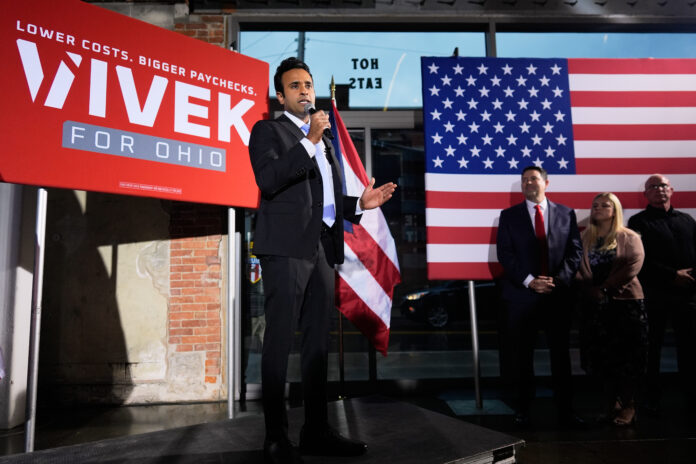
Belaaz6 hours agoBusinessman Vivek Ramaswamy won the Republican primary for governor of Ohio on Tuesday, setting up what is expected to be a competitive general election contest this fall against Democratic nominee Amy Acton, a former state health director who ran unopposed in her party’s primary.
Ramaswamy, who gained national prominence during the 2024 Republican presidential primary before withdrawing and endorsing President Donald Trump, now returns to his home state as the GOP standard-bearer in the governor’s race. Early polls show the race between Ramaswamy and Acton to be closely contested.
Ohio Democrats, buoyed by competitive polling in both the governor’s and Senate races, are expressing cautious optimism about their prospects in a state that has trended Republican in recent cycles. “It just feels like Ohio is back,” said state Democratic Party Chair Kathleen Clyde. It has been twenty years since Ohio last elected a Democrat as governor.
In Indiana, President Trump’s aggressive intervention in the state’s Republican primary elections yielded sweeping results Tuesday, as Trump-backed challengers defeated five of the seven incumbent state senators he had targeted for ouster. The incumbents had drawn the president’s ire last December when they voted to block a redrawn congressional map he had championed, which was designed to deliver two additional House seats to Republicans ahead of the fall midterm elections.
Trump-endorsed challengers Blake Fiechter, Tracey Powell, Michelle Davis, Brian Schmutzler, and Trevor De Vries each defeated their incumbent opponents. Fiechter’s victory was particularly notable, as he unseated state Sen. Travis Holdman, a member of the Republican Senate leadership. One Trump-backed challenger lost, with incumbent Greg Goode successfully defending his seat — the only senator among the seven to have held public listening sessions with constituents on the redistricting question before casting his vote against the map.
Roughly $12 million was spent on advertising across the seven Indiana contests, the bulk of it by Trump-allied outside groups opposing the incumbents, according to the ad-tracking firm AdImpact. The results represent a significant display of the president’s continued hold over the Republican base, as GOP voters largely sided with his push to reshape the state party in his image.
The Indiana races drew an additional subplot, as former Vice President Mike Pence broke publicly with Trump by endorsing incumbent state Sen. Jim Buck in the District 21 contest. Buck went on to lose to Trump-backed challenger Tracey Powell.
In Ohio’s Senate primary, former Sen. Sherrod Brown won the Democratic nomination, setting up a general election rematch of sorts against Republican Sen. Jon Husted, who was appointed to the seat after Vance became vice president. Brown, a three-term senator who lost his seat in 2024, is seeking a political comeback in what early polls suggest could be a closely fought race.
 Matzav6 hours ago
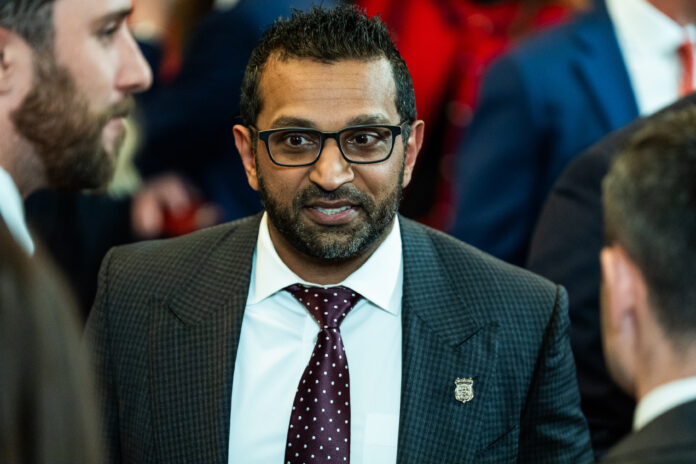
[Video below.] FBI Director Kash Patel said the bureau is now using artificial intelligence to identify and stop potential acts of violence, including planned school shootings, as part of a wider push to modernize federal law enforcement operations.
“AI was never used at the FBI till we got there,” Patel said. “I’m using it everywhere.”
Speaking Monday in an interview on Sean Hannity’s podcast, Patel explained that the FBI has incorporated AI into its investigative systems to handle the large volume of tips it receives each week. He described the move as a major shift from how the agency previously operated.
Patel said the technology has already played a role in preventing several potential attacks, including a suspected school shooting plot in North Carolina and another planned incident in New York.
In those cases, he said, incoming tips were quickly processed with the help of AI tools, enabling agents to identify credible threats and respond without delay.
He added that the bureau has been working more closely with private technology companies, noting that some of the intelligence used in these efforts has come from firms developing AI systems.
The comments come as the FBI seeks to improve its public standing after years of political criticism and declining trust.
During the Biden administration, the agency faced scrutiny from Republican lawmakers and others over its handling of politically sensitive cases, as well as accusations of bias.
Now operating under leadership aligned with President Donald Trump, the bureau is emphasizing technological advances and successful prevention efforts as part of a broader attempt to restore public confidence.
Officials say the growing reliance on AI-based threat detection is intended to position the FBI as more proactive, efficient, and responsive in addressing safety concerns.
While Patel described the technology as a significant step forward in preventing violence, the expanded use of AI in law enforcement is expected to face continued scrutiny from civil liberties groups concerned about surveillance, data privacy, and the risk of bias in automated systems.
WATCH:
{Matzav.com}
 Vos Iz Neias6 hours ago
WASHINGTON (AP) — White House economists estimate that President Donald Trump’s deals with pharmaceutical companies to drop some of their U.S. prescription drug prices to what they charge in other countries could save $529 billion over the next 10 years.
The analysis obtained by The Associated Press includes the first economy-wide projections behind a policy at the core of Trump’s pitch to voters going into November’s midterm elections for control of the House and Senate. Democratic lawmakers have been doubtful about the savings claimed by Trump and these new numbers are likely to trigger additional questions about the data.
Cost-of-living issues are at the forefront of voters’ concerns and higher energy prices tied to the Iran war have deepened the public’s anxiety. Trump has tried in part to address affordability concerns by focusing on his efforts to cut deals with companies so that the cost of prescription drugs in the U.S. would no longer be dramatically higher than in other affluent nations.
“Now you have the lowest drug prices anywhere in the world,” Trump said at a Friday rally before a crowd of seniors in Florida. “And that alone should win us the midterms.”
The analysis was done by administration officials for the White House Council of Economic Advisers. They also estimated that federal and state governments could save a combined $64.3 billion on Medicaid during the next decade because of what Trump calls his “most favored nation” policy on drug prices.
Few of the details of the deals struck by the Trump administration and 17 leading pharmaceutical companies have been made public, making it hard to independently verify the projected savings. The White House analysis sought to estimate the prospective savings as more medications come onto the market and fall under Trump’s framework — with one model in the report tallying the possible savings at $733 billion over a decade.
Trump and his Department of Health and Human Services have touted his drug-pricing deals as transformative and urged Congress to codify their principles into law. Democratic lawmakers have challenged the administration’s claims of savings. Senate Finance Committee Ranking Member Ron Wyden, D-Ore., and 17 Senate Democrats in April proposed a measure requiring the administration to disclose the terms of the agreements signed by pharmaceutical companies.
“If these deals are so great, why is the Trump administration afraid of showing them to the public?” Wyden said when announcing the measure. Health Secretary Robert F. Kennedy Jr. said his team would share details that didn’t include proprietary information or trade secrets.
The potential savings estimated by the Trump administration would be substantial as Americans spent $467 billion on prescription drugs in 2024, according to the most recent government data available. The analysis is premised on the idea that foreign countries would also pay more for their prescription drugs, which would diversify drugmakers’ sources of revenue and preserve their ability to innovate with new treatments.
The Congressional Budget Office in October 2024 estimated that a plan similar to what Trump ended up adopting could reduce prescription drug prices by more than 5%, though the decrease “would probably diminish over time as manufacturers adjusted to the new policy by altering prices or distribution of drugs in other countries.”
The scope of the savings claimed by the Trump administration are likely to intensify the scrutiny by Democrats, who counter that any price reductions would be offset by higher costs for prescription drugs not covered by the “most favored nation” framework. One of their main critiques is that pharmaceutical companies have increased their profit margins while working with the administration.
In April, staff working for Sen. Bernie Sanders, I-Vt., released an analysis that looked at 15 of the companies that have agreed to this drug-pricing plan and found that their combined profits jumped 66% over the past year to $177 billion. The report noted that the tax cuts Trump signed into law last year “exempted or delayed many of the most expensive drugs” from price negotiations with Medicare.
The Trump administration has countered that they consider Sanders’ critique to be flawed, saying that it’s based on the list prices for pharmaceutical drugs instead the actual price that patients pay.
 Matzav
Related stories
 Matzav7 hours ago
 Vos Iz Neias8 hours ago
 Yeshiva World News8 hours ago
 Yeshiva World News8 hours agoMatzav6 hours ago
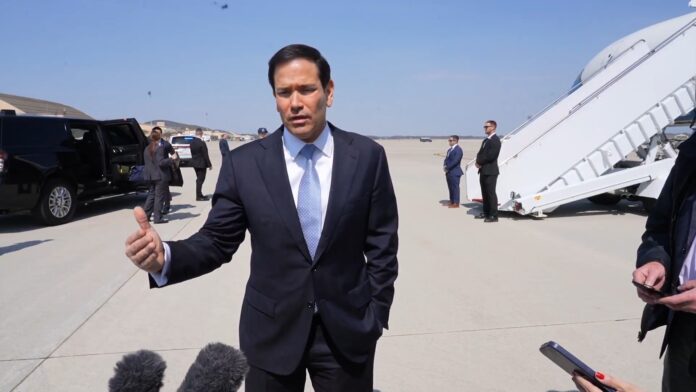
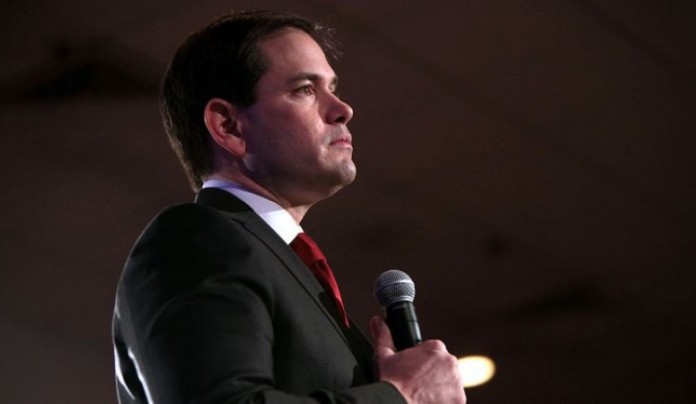
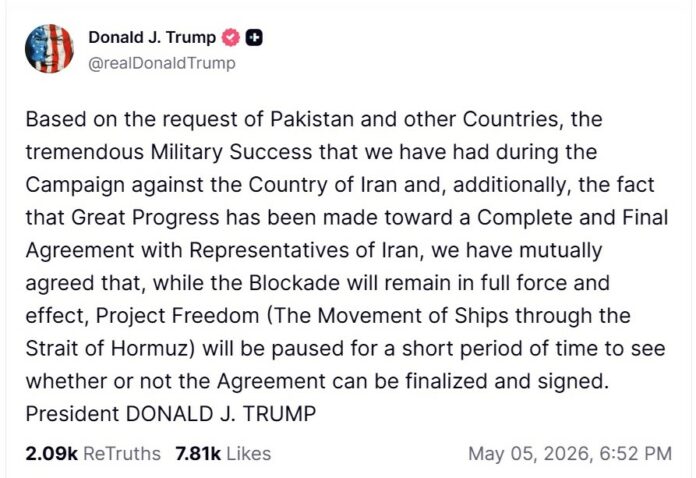
Secretary of State Marco Rubio announced Tuesday that the “Operation Epic Fury” phase of the confrontation with Iran has concluded, marking a transition to a new stage centered on securing shipping routes and assisting stranded civilians.
Speaking during a briefing at the White House, Rubio said the operation achieved its primary objective, explaining that Iran’s capacity “to build a shield behind which they could hide their nuclear program was wiped out. That is a very substantial achievement and that was the purpose of this operation from day one.”
He added that the initial phase is now complete, stating, “The operation is over. Epic Fury, the president notified Congress, we’re done with that stage of it. We are now onto this project of freedom.”
BREAKING: Secretary Marco Rubio STUNS the press pool at the White House by announcing the Operation Epic Fury phase of the Iran conflict is now OVER.
RUBIO: “So their ability to build a shield behind which they could hide their nuclear program was wiped out.”
“That is a very… pic.twitter.com/6GNDVeBrpo
— Overton (@overton_news) May 5, 2026
Addressing diplomatic efforts, Rubio said any future agreement must go beyond uranium enrichment and deal with remaining nuclear materials. “As far as a negotiation is concerned, I think the president has been clear that part of the negotiation process has to be, not just enrichment but what happens to this material that is very deep somewhere that they still have access to it they ever wanted to dig it out. That has to be addressed and that is being addressed in the negotiation,” Rubio stated.
Rubio also elaborated on “Project Freedom,” a newly launched initiative announced by President Donald Trump aimed at escorting vessels through the Strait of Hormuz and restoring safe passage for commercial traffic.
He described the mission as a humanitarian effort, saying its goal is “to rescue almost 23,000 civilians from 87 different countries that are trapped and left for dead in the Persian Gulf by the Iranian regime.”
Rubio sharply criticized Iran’s actions in the region, calling the blockade of the strait “not just criminal,” but “desperate and destructive,” and describing it as “piracy.”
Highlighting the global implications, he warned that “Nations from around the world, the overwhelming majority of whom are not even engaged in any military hostilities, are now at risk, not just of losing their cargo, but the lives of their own citizens, because of this blockade,” and noted that vessels could soon run out of essential supplies, including food and drinkable water.
Emphasizing the civilian toll, Rubio said, “These are innocent bystanders. These are countries and ships that have nothing to do with any of this, and nonetheless, are being caught in the middle of it and being held hostage, merely because Iran can do it. Just as the regime brutally slaughtered tens of thousands of its own citizens for the crime of peaceful protest.”
He added that ten civilian sailors have already died due to the blockade and related attacks, and said several countries have requested U.S. help in freeing their ships.
Rubio characterized Project Freedom as limited in scope, calling it a “defensive operation” in which American forces would only respond if attacked.
Earlier Tuesday, President Trump issued a warning to Iran, saying it “should wave the white flag of surrender” as U.S. operations continue to weaken its ability to threaten maritime traffic in the Strait of Hormuz.
Speaking to reporters, Trump said, “They play games, but let me just tell you, they want to make a deal. And who wouldn’t, when your military is totally gone?”
He further claimed Iran’s remaining capabilities are minimal, stating the country has been reduced to using “peashooters.”
Trump also asserted that “nobody’s going to challenge the blockade” of Iranian shipping.
However, he declined to define what actions would constitute a breach of the ceasefire, even after Iran launched cruise missiles and attack drones at the United Arab Emirates.
Related stories
Matzav7 hours agoVos Iz Neias8 hours agoYeshiva World News8 hours agoYeshiva World News8 hours ago Vos Iz NeiasVos Iz Neias6 hours ago
COLUMBUS, Ind. (AP) — A majority of Republican state senators whose opponents were endorsed by President Donald Trump lost on Tuesday, dealing the president wins in a deep red state just four months after lawmakers rejected his redistricting plan.
Of the seven challengers endorsed by Trump, at least four won.
Twenty-one Republican senators voted against redistricting in December, with eight running for reelection this year. Trump endorsed primary challengers against seven, and the president’s allies spent millions of dollars on races that rarely get much attention from Washington.
It’s become a costly and unprecedented intraparty battle that has exacerbated tensions among Republicans ahead of the November midterm elections that will determine control of Congress.
Indiana Lt. Gov. Micah Beckwith said the state Senate primary races are pitting “the Republicans who tend to want to avoid the fight and the Republicans who feel like we need to fight.”
“So the only question is, ‘Will you fight or will you get trampled by the other side?’” Beckwith said.
Indiana rejected Trump on redistricting
Trump began leaning on Republican-led states last year to redraw their congressional maps to make it easier for his party to hold its thin majority in the U.S. House. Although redistricting is normally done once a decade, after a new census, Trump wanted to abandon tradition to gain a political edge.
Texas was the first to follow through, and the White House pressured Indiana to go along too. Vice President JD Vance met with state politicians in Washington and Indianapolis, and Trump weighed in by conference call.
However, Indiana senators rebuffed the effort, one of the president’s first significant political defeats of his second term.
The redistricting fight divided Republicans in Indiana, a state Trump won three times by no less than 16 points. Republican Gov. Mike Braun, U.S. Sen. Jim Banks and organizations such as Turning Point Action have worked alongside Trump to unseat the incumbents.
“Big night for MAGA in Indiana,” Banks posted on social media.
Jim Bopp, a prominent Indiana attorney who leads a political action committee aligned with Braun, predicted that Trump’s support will carry the day for the challengers.
“Republican voters overwhelmingly support Trump and when they find out Trump has endorsed a particular Senate candidate, they swing their support behind them,” he said.
Indiana opposition came from constituents, former governor
Opposition to the effort came from anti-Trump Republicans and those wary of the president reaching so deeply into state decision-making. Former Republican Gov. Mitch Daniels, who had stepped away from politics after leaving the governorship in 2015, reemerged to help raise money for targeted incumbents.
The senators who broke with Trump said they were listening to their constituents who were overwhelmingly against his redistricting plan. Some said they didn’t like Trump’s aggressive tone in pushing the plan.
“We hate to be told what to do,” said Mike Murphy, a former Republican state representative. “We’re very independent thinking people. So when Donald Trump and his goons come in and try to tell us that we need to redistrict to help his political future, that’s the worst thing you can do.”
He said Trump and those spending big money to take out the incumbents don’t understand Indiana politics.
“There’s just so many misjudgments on people’s part because they tend to fly at the 50,000 foot level and they don’t go to the barbecues and the church fish fries and the things that make Indiana politics,” Murphy said.
Bopp, who supports the Trump-backed challengers, said the primary is a chance for Indiana Republicans to express how important it is to redraw the congressional lines there.
“It’s not a matter of Trump’s power,” Bopp said. “It’s about Republican primary voters who support his agenda and don’t want a Democratic House that will be hugely destructive to the Trump presidency and the country.”
 Vos Iz Neias6 hours ago
NEW YORK (AP) — A federal civil rights agency filed a discrimination lawsuit Tuesday against The New York Times, claiming that the news organization passed over a white male employee for a promotion in favor of a lesser qualified woman to meet its diversity goals.
The New York Times called the lawsuit politically motivated and said it would defend itself “vigorously.”
The Equal Employment Opportunity Commission filed the lawsuit Tuesday on behalf of a New York Times editor who lodged a complaint after he didn’t get the role of deputy real estate editor in 2025, alleging gender and racial discrimination under Title VII of the 1964 Civil Rights Act, which prohibits employment discrimination on the basis of sex, race, national origin or religion.
The EEOC claimed the news organization’s publicly stated goals of increasing the number of women and people of color in its leadership ranks influenced the decision to exclude the white male applicant for a final round of interviews, while advancing three women and a Black man.
EEOC Chair Andrea Lucas, a Republican, has been a staunch champion of the Trump administration’s campaign against corporate diversity policies that she argues veer into discrimination against white men and others. In December, Lucas posted a social media call urging white men to come forward with complaints if they believe they have faced discrimination because of their employer’s diversity policies.
“No one is above the law — including ‘elite’ institutions. There is no such thing as ‘reverse discrimination,’” Lucas said in a statement. “No matter the size or power of the employer, the EEOC under my leadership will not pull punches in ensuring evenhanded, colorblind enforcement of Title VII to protect America’s workers, including white males.”
The New York Times spokeswoman Danielle Rhoades Ha said the EEOC “deviated from standard practices in highly unusual ways. The allegation centers on a single personnel decision for one of over 100 deputy positions across the newsroom, yet the EEOC’s filing makes sweeping claims that ignore the facts to fit a predetermined narrative.”
“Neither race nor gender played a role in this decision – we hired the most qualified candidate, and she is an excellent editor,” Rhoades Ha added.
In the lawsuit filed in the U.S. District Court of the Southern District of New York, the EEOC complaint said the complainant, who was not identified, has worked as an editor for The New York Times since 2014, mostly as a senior staff editor on the international desk with previous experience working on real estate stories.
The lawsuit claims that the woman ultimately appointed deputy real estate editor “did not have experience with real estate journalism” but “as a multiracial female, this candidate matched the race and/or sex characteristics NYT sought to increase in its leadership.” The EEOC said one final panel interviewer described her as “a bit green overall.”
The EEOC’s lawsuit extensively cited The New York Times diversity and inclusion policies as evidence for its alleged discriminatory policies.
In particular, the lawsuit cites the organizations “Call to Action” plan published in February 2021 in which it set a goal of increasing the number of Black and Latino employees in leadership by 50% by 2025. The EEOC said The New York Times met that goal in 2022 but continued its commitment to diversity policies. According to reports cited in the lawsuit, white employees composed 68% of its leadership in 2024, compared to 29% people of color.
Lucas has been particularly critical of representation goals that many companies have publicly announced, particularly in the wake of of the 2020 racial protests following the police killing of unarmed Black man George Floyd.
In almost all cases, it is illegal under Title VII for employers to take race or gender into account when making hiring, promotion and other decisions. Lucas has taken aim at practices she claims pressure hiring managers to do just that, from certain forms of anti-bias training to ensuring a diverse slate of candidates for roles. Critics say the EEOC is attacking long held practices designed to level the playing field for workers who have traditionally faced discrimination in U.S. workplaces.
The EEOC’s sole Democratic commissioner, Kalpana Kotagal, voted against bringing the lawsuit against The New York Times, saying it was “driven not by the merits, but by a desire to advance the administration’s political agenda, which weakens civil rights protections for workers and undermines employer efforts to advance equal employment opportunity.”
“With the agency at historically low staffing levels, every decision to use precious agency resources on political cases like this, is a decision not to bring righteous cases on behalf of the workers who need us most. That is a grave disservice to the public,” Kotagal added in a statement posted to LinkedIn.
Kotagal said that in her view, the EEOC failed to link any the diversity of policies of The New York Times with the specific employment decision being challenged.
“An employer publishing aggregated demographic data, having aspirational goals, or engaging in robust recruitment and retention efforts, also does not establish misconduct,” Kotagal said.
Kotagal has been the EEOC’s only Democratic commissioner since Trump abruptly fired two other Democratic commissioners before their terms expired, helping pave the way for an aggressive overhaul of the country’s civil rights enforcement.
In February, the EEOC revealed that it was investigating sportswear giant Nike for racial discrimination against white employees. Unlike the New York Times lawsuit, the Nike investigation stemmed not from a worker complaint but by Lucas herself, who filed what is known as “commissioner’s charge” to investigate an array of diversity policies at the sneaker company. The agency has also filed a lawsuit against a regional Coca-Cola distributor alleging that the company discriminated against men by only inviting women to a networking retreat at a casino.
 Vos Iz Neias7 hours ago
(AP) – Billionaire biotech entrepreneur Vivek Ramaswamy has clinched the Republican nomination for Ohio governor and will face off this fall against the state’s COVID-era health director, Democrat Amy Acton.
A newcomer to state politics, Ramaswamy aggressively positioned himself for the job early with the help of endorsements from President Donald Trump and the state Republican Party.
Trump’s endorsement continues to carry weight in Ohio, which favored him three times for president, but Ramaswamy could face headwinds amid the president’s lagging popularity over the war in Iran and the rising cost of living.
Acton, a physician who was unopposed in her primary, has a well-known public profile and robust fundraising.
 Matzav
Related stories
Matzav7 hours agoA group of House Democrats is urging the Trump administration to publicly acknowledge Israel’s undeclared nuclear weapons program, a move that would abandon decades of U.S. policy but confirm what has been an open secret among intelligence officials since the late 1960s.
In a letter to Secretary of State Marco Rubio obtained by The Washington Post, more than two dozen lawmakers, led by Rep. Joaquin Castro (Texas), say Washington’s silence on the program is indefensible amid the war in Iran and the acute threat of military escalation.
“The risks of miscalculation, escalation, and nuclear use in this environment are not theoretical,” the lawmakers wrote. “Congress has a constitutional responsibility to be fully informed about the nuclear balance in the Middle East, the risk of escalation by any party to this conflict, and the administration’s planning and contingencies for such scenarios.”
“We do not believe we have received that information,” the lawmakers wrote.
The concerns about nuclear escalation are shared by some inside the Trump administration, who say Israel’s red lines may not be adequately understood, said U.S. administration officials, who spoke on the condition of anonymity to discuss intelligence matters.
Israel does not acknowledge its nuclear weapons program – built in secret beginning in the late 1950s – and has no publicly stated doctrine on how it might use such weapons.
The letter is the latest sign of a shift in the Democratic Party’s approach to Israel amid growing frustration over the country’s killing of civilians in Gaza, the West Bank and Lebanon and its high-profile lobbying in Washington for the war in Iran.
Avner Cohen, a leading historian on Israel’s nuclear program, said the letter breaks a taboo that has endured for more than half a century.
“This is something that people did not dare do before,” said Cohen, a professor at the Middlebury Institute of International Studies and author of the book “Israel and the Bomb.”
“Even raising these questions publicly is a departure from a bipartisan norm,” he added.
The origin of U.S.-Israeli silence on the nuclear issue dates back to an informal agreement between President Richard M. Nixon and Israeli Prime Minister Golda Meir in 1969, when Washington effectively accepted Israel’s policy of nuclear ambiguity and agreed to shield it from international scrutiny, Cohen said.
“Israel alone could not have maintained this policy over decades without the United States,” he said.
The letter’s authors argue the policy now undermines U.S. credibility, as Washington seeks to limit the nuclear programs of Iran, Saudi Arabia and the United Arab Emirates without acknowledging the nuclear weapons program of their neighbor Israel.
“We cannot develop coherent nonproliferation policy for the Middle East … while maintaining a policy of official silence about the nuclear weapons capabilities of one party central to the ongoing conflict,” the lawmakers wrote.
The State Department did not respond to a request for comment on the policy. The Israeli government also did not respond to a request for comment.
Daryl Kimball, the executive director of the nonprofit Arms Control Association, said Israel’s position is “strongly against changing the status quo.”
“Nonrecognition allows the Israeli government to redirect attention at other countries in the region who are pursuing nuclear activities that could lead to nuclear weapons,” he said.
In March, Castro asked the State Department’s top arms control official, Thomas DiNanno, to describe Israel’s nuclear weapons capability during a public hearing and DiNanno declined. “I can’t comment on that specific question,” he said.
Castro, in an interview with The Post, said the United States “shouldn’t refuse to disclose this information about a foreign nation simply out of courtesy when there’s so much at stake for our own service members, our economy and our country.”
U.S. officials speak candidly about the nuclear weapons programs of Britain, France, India, Pakistan, Russia, North Korea and China, and Israel should be no different, Castro said.
The push for transparency by Democrats reflects a deeper soul-searching on Israel that is happening within the party, said Jeremy Shapiro, a former Obama administration official.
Last month, a record 40 Senate Democrats voted to block weapons transfers to Israel. According to the Pew Research Center, 80 percent of Democrats now view Israel unfavorably up from 53 percent in 2022.
“Many, perhaps most Democrats, at this point want to see fundamental changes in the U.S.-Israeli relationship,” Shapiro said. “The first change that these Democrats want to see is for the U.S. to hold Israel to the same standards as other countries on issues such as nuclear weapons.”
The U.S. executive branch under both political parties has maintained the secrecy policy, but there have been recent discussions among Trump administration officials about what might trigger an Israeli nuclear response and concerns that the threshold may be lower than Washington previously assessed, U.S. officials said.
“There is a low boil of unease about Israel’s nuclear program and what could compel them to use nuclear weapons short of facing a WMD attack,” said an administration official.
A scenario gaining fresh scrutiny among U.S. officials involves Israel’s air defenses becoming overwhelmed by missile or rocket fire from its neighbors. Whether Israel would resort to a nuclear response when faced with an unusually high civilian death toll has been discussed “frequently,” said the administration official.
In March, Iranian missiles hit the cities of Dimona and Arad, near Israel’s main nuclear research facilities, following U.S. and Israeli strikes on Iran’s nuclear program. The Iranian counterattack did not cause a radioactive incident but exposed gaps in Israel’s vaunted air defense system.
The Democrats’ letter to Rubio requests detailed information about Israel’s nuclear program, including the level of its enrichment capabilities, where fissile material is produced and whether Israel has relayed to the U.S. its red lines for using nuclear weapons in the current conflict.
Castro said that he plans to make the Trump administration’s response public when he receives it. If certain answers can be revealed only in a classified setting, he could be amenable to that, the congressman said, but he won’t relent on the fundamental question of whether Israel has a nuclear weapons program.
“That’s not something that should be kept secret to the world,” he said.
(c) 2026, The Washington Post · John Hudson
 Vos Iz Neias7 hours ago
New York (VINNEWS/Rabbi Yair Hoffman) Dear Claire,
You do not know me, and I do not pretend to know the depth of the darkness inside the room where you have been living. But your face has been on the front pages of newspapers today, and your words have been read with tears of human beings across the world. And I desperately hope, that you will read this before the court rules.
Please. Please stay.
There is no attempt here to argue that you are not suffering. The suffering is real. You have taken twenty-four different medications, multiple therapies, ECT – just to relieve that suffering. At eight, you wrote in your Hello Kitty diary that you wished you were dead. You sat on train tracks thinking that the world would be lighter without you. It won’t – it will be far darker.
You have a wound that has been bleeding for forty-one years, and anyone who tells you otherwise has not listened.
But listen, Claire. Just for the length of this letter, listen.
There is a verse in the Book of Deuteronomy, where Moses, standing on the edge of the Jordan, with all of Israel before him, says something that has echoed for three thousand years: “U’vacharta ba’chayim” — “And you shall choose life, so that you may live, you and your offspring” (Devarim 30:19).
Notice the wording. Not “life will be easy.” Not “life will feel worth living.” The Torah commands choosing life specifically because life sometimes does not feel so choosable. The words only makes sense in the dark because in the light, no command is needed.
You have been in the narrow place for so long that the narrow place feels like the whole world. It is not. The mind, in severe depression, is a liar. It is a brilliant, sophisticated, articulate liar that uses your own voice and your own intelligence against you. It tells you that the suffering is permanent, that no future treatment will work because past treatments have not, that your loved ones will eventually be relieved, that the universe will close neatly behind you. Every one of those sentences is false, and the part of your brain that is ill or has been affected by some bad chemistry is the part generating them.
Your own psychiatrist, Dr. Fefergrad, said it plainly: “I believe she can get well.” He has nothing to gain by lying. He believes it. Hold onto his belief on the days you cannot find your own.
Now, the harder part of this letter.
Claire, you said in court that you want to die alone in a hospital so that your loved ones will not have to watch. That sentence reveals the most beautiful thing about you, which is that even now, in agony, you are thinking of others. So please think of others a little longer.
Your sister Melissa said she was furious, that she saw it as giving up. Hear her. Not because anger is the right response — she would tell you herself that underneath the fury is terror — but because she is telling you what your absence will do.
Your mother said no mother wants to see incredible suffering, and no mother wants to lose a child before her. She is being torn in half on a public stage, in the New York Times, because she loves you so much that she cannot bring herself to say no out loud, and she cannot bring herself to say yes either. That is not a peaceful death you would be leaving her. That is a wound she will carry into her own grave.
And there is something larger. Something that goes beyond your family.
If a Canadian court grants the exemption, a delicate and precious line moves. It moves for the next person, and the next, and the next. It moves for the twenty-two-year-old whose depression will lift in three years if she is alive to see it. It moves for the veteran who is told, instead of treatment, that the door is open. It moves for the elderly woman in a nursing home who does not want to be a burden. T
The data from countries that have walked further down this road climbs every year, and they climb fastest among the lonely, the poor, the disabled, and the mentally ill. You are an articulate, accomplished, beloved woman with two psychiatrists and a national platform. The next person in line will have none of that, and the door you are pushing open will be the door they walk through without anyone noticing.
There is a teaching from the Jerusalem Talmud that whoever destroys a single soul, Scripture considers it as if he destroyed an entire world; and whoever sustains a single soul, Scripture considers it as if he sustained an entire world. The sages did not say a soul contains a world. They said a soul is a world. Every memory you carry, every shade of light you have noticed, every kindness you have ever extended to your Maltipoo Olive, every line you delivered in every film — that is a universe. Universes do not get rebuilt. When they end, they end.
Here is what is being asked. Not forever. Not a promise to be cured. Not a vow to be happy.
Psychiatry is in a more dynamic moment than it has ever been. The you that is reading this letter cannot imagine relief. The you of next October might be writing a letter of your own to someone else in the narrow place, telling her what you wish someone had told you.
And if not — if a year from now nothing has changed — this conversation can be had again, in a year. Death is the one decision that allows no revision. Everything else can wait.
There is a story told about the Kotzker Rebbe, who was asked why G-d created human beings if He knew they would suffer. The Kotzker answered: G-d did not create us to be happy. He created us to be real. To be a witness. To choose, in the dark, to be a presence in the world. Claire, your presence is itself a kind of witness. The fact that you have stayed alive for forty-nine years, with the mind you have been given, is not a failure. It is one of the bravest things a person can do, and you have done it every single morning, including this morning.
Olive is waiting at the foot of the bed. Your mother is praying tonight in a language perhaps neither of you would call prayer. Your sister, the one who loves you so much it comes out as anger, is checking her phone. Dr. Fefergrad still believes you can get well. There are strangers, this writer among them, who do not know your face from any film but who know your name now, and who are asking, from across borders and faiths and languages, the same simple thing.
Please stay with us.
U’vacharta ba’chayim. Choose life. Even when life has not earned the choosing. Especially then.
Rabbi Yair Hoffman
 Matzav
Related stories
 Belaaz15 hours ago
 Vos Iz Neias17 hours ago
 Vos Iz Neias1 day ago
 Vos Iz Neias1 day agoMatzav7 hours ago
The rodent-borne hantavirus is suspected in an outbreak aboard a cruise ship in the Atlantic Ocean in which three passengers have died within three weeks.
The World Health Organization said two cases of hantavirus had been confirmed and that there are five suspected cases. Oceanwide Expeditions, the operator of the Hondius expedition ship, said one passenger is in intensive care in Johannesburg and two crew members aboard the vessel have respiratory symptoms.
There are 87 surviving passengers and 61 crew members aboard the vessel, representing almost two dozen countries.
Although hantavirus is normally linked to exposure to infected rodents’ urine or feces, in rare cases it can spread between people, as WHO officials believe may have happened in the case of the Hondius. Here’s what to know about the disease.
What happened aboard the ship?
The Hondius, a polar-rated expedition ship, set off from Ushuaia, Argentina, on April 1 for a journey across the South Atlantic, with an itinerary including such remote and ecologically diverse locales as Antarctica, South Georgia, Nightingale Island, Tristan da Cunha, St. Helena and Ascension Island.
Details released by Oceanwide Expeditions and the WHO show an alarming timeline of events beginning about a week later.
The illnesses began April 6, when a Dutch man developed fever, headache and mild diarrhea. He died April 11 after developing respiratory symptoms, but no microbiological tests were performed, the WHO said. His wife, who was experiencing gastrointestinal symptoms, accompanied his body as it was brought off the ship on St. Helena, a remote island territory in the South Atlantic Ocean. She was flown to a hospital in Johannesburg, where she died April 26. Her case was confirmed as a hantavirus infection on May 4, the WHO said.
Aboard the ship, a British man reported shortness of breath and signs of pneumonia on April 24, and on April 27 he was medically evacuated from the South Atlantic island of Ascension to South Africa, where hantavirus was identified. That man is in the intensive care unit in critical but stable condition, Oceanwide Expeditions said Monday.
On Saturday, a third passenger died, a German national with pneumonia-like symptoms that began April 28. The cause has not been identified.
Of the passengers, 19 are British, 17 are American, 13 are Spanish and eight are Dutch. More than half of the crew members are Filipino nationals.
What is hantavirus?
Hantaviruses are a family of viruses that can cause serious illness and death. They are spread mainly by rodents and can cause hantavirus pulmonary syndrome (HPS), which is more common in the Western Hemisphere, and hemorrhagic fever with renal syndrome (HFRS), which is found mostly in Europe and Asia, according to the Centers for Disease Control and Prevention. Both are severe and potentially deadly.
It can be contracted by contact with droppings from infected rodents, commonly through inhalation when entering or cleaning unventilated areas. Person-to-person transmission is rare but has occurred in a species of the virus called the Andes virus that has been found in Argentina, where the cruise began.
In a briefing Tuesday, WHO infectious-disease epidemiologist Maria Van Kerkhove said authorities believe that the hantavirus aboard the Hondius is the Andes virus and was spread by human-to-human transmission among close contacts. She said WHO’s “working assumption” is that the initial patient and his wife came into contact with the virus before joining the ship in Argentina, noting that “we don’t have a full picture yet.”
What are the symptoms?
Symptoms typically start to show between one and eight weeks after first contact with the virus.
HPS affects the lungs and can cause fatigue, fever and muscle aches initially, followed by coughing and shortness of breath. Once inhaled, the virus can reach the lungs and infect cells that line tiny blood vessels in the lungs, allowing fluid to enter and making it difficult to breathe, according to the American Lung Association.
Thirty-eight percent of people who develop respiratory symptoms die of the disease, according to the CDC.
HFRS is less deadly but still serious. It affects the kidneys and causes headaches, back and abdominal pain, fever, nausea and blurred vision. Later symptoms include low blood pleasure, internal bleeding and kidney failure. Fatality rates vary between less than 1 percent and up to 15 percent.
How common is it?
Hantaviruses are found all around the world, but outbreaks are rare. In 1993, a mysterious outbreak of severe respiratory illness originating in the Southwest killed about 30 people. The deaths were the first documented cases in the Americas of hantavirus disease in humans and triggered a public health response that has helped prevent other similarly sized outbreaks to date, The Washington Post reported.
Hantavirus was named as the cause of death for Betsy Arakawa, pianist and wife of actor Gene Hackman, last year.
There were 890 laboratory-confirmed hantavirus cases in the United States between 1993, when the CDC began tracking the illness, and the end of 2023. More than 90 percent of those occurred west of the Mississippi River. It is commonly linked to people with occupational exposure, such as those working in construction, pest control, janitorial and agricultural work, the American Lung Association said.
Globally, there may be as many as 150,000 cases of HFRS each year, according to a review by the American Society for Microbiology.
Treatment options are limited, so the best protection against the illness is to avoid contact with rodents and to take care when cleaning their droppings, wearing a well-fitted N95 mask. Health officials also warn against vacuuming or sweeping contaminated areas to avoid releasing particles into the air.
What happens now?
The two symptomatic crew members are being prepared for medical evacuation to the Netherlands for treatment, Van Kerkhove said. Afterward, the ship will continue to the Canary Islands for a full investigation, including an assessment of the risk to the passengers on board. In the meantime, passengers are being told to stay in their cabins, with hygiene protocols in place.
Contact tracing is also being carried out for the passengers of the plane that carried the woman who died in Johannesburg. But Van Kerkhove said WHO assesses the overall risk to the public as low.
(c) 2026, The Washington Post · Sammy Westfall, Kendra Nichols
Related stories
Belaaz15 hours agoVos Iz Neias17 hours agoVos Iz Neias1 day agoVos Iz Neias1 day ago Yeshiva World News7 hours ago
A Chareidi soldier in IDF uniform was verbally assailed at Kever Rashbi during Lag B’Omer celebrations Monday night, as thousands of pilgrims overwhelmed authorities attempting to contain the crowds.
Video footage posted to social media showed a group of men surrounding two armed soldiers, one wearing a yarmulka and sporting payos, while shouting at them. One soldier was called a “Nazi” during the confrontation.
Your browser does not support the video tag.
Despite IDF Home Front Command restrictions capping outdoor gatherings at 200 people and indoor events at 600, tens of thousands arrived at Meron for Lag BaOmer.
Clashes between attendees and law enforcement erupted throughout the night. In one instance, Chareidi men threw plastic chairs and water bottles at police officers stationed nearby.
National Security Minister Itamar Ben Gvir visited Meron and praised police for their restraint, describing their approach as “gentle” while urging the public to avoid traveling there.
Magen David Adom paramedics reported 23 injuries. One person sustained a moderate head wound, while the remainder suffered light injuries.
(YWN World Headquarters – NYC)
 Vos Iz Neias8 hours ago
(AP) – The University of Michigan has issued a formal apology after a history professor lauded pro-Palestinian student protesters in a commencement speech over the weekend.
The remarks — and the ensuing apology — have set off cascading recriminations, with pro-Israel advocates calling to slash the school’s funding as others accuse university officials of bowing to political and donor pressure.
In a speech on Saturday at the universitywide commencement ceremony, Derek R. Peterson, a professor of East African history and outgoing chair of the faculty senate, credited “pro-Palestinian student activists who have over these past two years opened our hearts to the injustice and inhumanity of Israel’s war in Gaza.”
The comments followed Peterson’s praise for Moritz Levi, the first Jewish professor at the University of Michigan, among others who he said had advanced causes of justice through the school’s history.
Within hours, video of the pro-Palestinian portion of Peterson’s speech had widely circulated online, drawing condemnations from Jewish groups, who allege that campus protests against Israel created a hostile environment for some students.
The same day, the university’s president, Domenico Grasso, issued a public apology, saying the comments were “inappropriate and do not represent our institutional position.”
“We regret the pain this has caused on a day devoted to celebration and accomplishment,” Grasso said, adding that Peterson’s speech “deviated from the remarks he had shared before the ceremony.”
The swift apology did not stop some Republican officials, including Florida Sen. Rick Scott, from calling for the school to be stripped of federal funding. A Republican member of the Board of Regents, which governs the public university, also hinted at possible discipline for the professor. The prominent Israeli-American investor Adam Milstein urged Jewish people to halt any donations to the school.
Peterson said he stood by the comments, calling it “ridiculous” to expect that graduations be apolitical.
“Michigan is not a finishing school for polite young men and women,” he said in a statement. “They do not need sentimental, cloying nostalgia. They need encouragement to face a flawed and unjust world head on, using the tools we’ve given them: critical reasoning, careful research, sympathy for the oppressed.”
Peterson also accused the administration of scrubbing the speech from the internet. A university spokesperson said it had been temporarily removed by YouTube over a music copyright issue and was back online.
In a joint letter published Tuesday, a coalition of academic labor groups — including the American Association of University Professors and the American Federation of Teachers — condemned the university’s statement.
“Institutional leaders have an obligation not only to tolerate faculty speech, but to defend it — especially in the face of external political pressure,” the letter read.
The speech came two years after protests against the war in Gaza erupted across college campuses, leading to canceled speeches and other disruptions to the springtime commencement ritual. Michigan’s campus saw students form a campground and walk out from classes in protest of the war.
A handful of students at U.S. universities also faced discipline in 2025 for seeking to highlight pro-Palestinian issues at graduation ceremonies, including a graduate of New York University whose diploma was withheld for criticizing Israel in a speech.
 Yeshiva World News
Related stories
Yeshiva World News8 hours agoJonathan Pollard, the former American intelligence analyst who spent three decades in federal prison for espionage, said Monday he will run for office in Israel’s next election.
Pollard disclosed the decision during an interview with Channel 13, citing the October 2023 Hamas attack on Israel as a catalyst for entering public life. He said the assault and subsequent national upheaval compelled him to take a more active political role.
The 30-year U.S. Navy intelligence veteran expressed support for a “full transfer” of Gaza’s population and argued that Israel is not winning the current conflict.
On Prime Minister Benjamin Netanyahu, Pollard said he would respect democratic outcomes but believed Israel needed to evaluate its leadership’s performance since October 7. He indicated willingness to work with some political figures but ruled out cooperation with Netanyahu’s chief rival, former Prime Minister Naftali Bennett, citing Bennett’s involvement in past security decisions.
Pollard will run alongside Nissim Louk, whose daughter Shani Louk was massacred during the October 7 attack. The 22-year-old German-Israeli tattoo artist was killed while fleeing the Nova music festival near Gaza. Her body, which became one of the conflict’s most recognized images after circulating on social media, was recovered by Israeli forces in May 2024.
Louk’s parents emerged as prominent advocates among families of October 7 victims and hostages, campaigning for the return of remains and accountability.
Pollard pleaded guilty in 1986 to espionage after providing Israeli contacts with hundreds of classified documents obtained during his role as a naval intelligence specialist. He received a life sentence in 1987, served 30 years, and was released on parole in 2015. His parole expired in 2020.
He immigrated to Israel in December 2020 after restrictions ended. Israel had granted him citizenship while imprisoned, and supporters long argued his sentence was disproportionate. U.S. officials, however, considered his breach among the most damaging involving an American ally.
Pollard returned to public attention recently following a reported meeting with U.S. Ambassador to Israel Mike Huckabee at the American Embassy in Jerusalem. The White House said it was unaware of the meeting, and it remained unclear whether Huckabee sought State Department approval. The CIA expressed alarm, concerned it could signal a softer American position on allied espionage.
(YWN World Headquarters – NYC)
 Matzav
Related stories
Matzav8 hours agoTwenty percent of the world’s oil and gas production remains bottled up behind the Strait of Hormuz. In Asia, schools are closing. In Europe, flights are being canceled. In the United States, the pain is mainly felt at the gas pump.
As of Monday, the national average price hit $4.46, according to AAA, up from less than $3 before the war. The Federal Reserve Bank of Dallas projects that the cost of a barrel of crude oil could top $167, equivalent to at least $5 per gallon based on historical trends, if the Strait remains closed through September.
That might be conservative. Major banks, including Macquarie, warn that spot prices for crude may peak at $200 per barrel by early summer. Based on past energy shocks, that implies U.S. gas prices could crack $7 a gallon, potentially high enough to trigger a global recession.
“The market is saying that this will solve itself within a month,” said Lars Lysdahl, a partner at the Oslo-based consulting and research firm Rystad Energy, “which I don’t believe.” Even if the Strait reopens tomorrow, oil prices are likely to stay high until next year, perhaps longer. Damaged refineries and other infrastructure will take years to repair.
The middle of a global energy crisis is a good time to ask yourself: Should I break up with the gas pump for good? The surge in oil prices is shifting the math for EVs in ways that may change the next car you buy.
This wouldn’t be the first oil shock to transform personal energy decisions and reorder the global economy. The 1970s oil crisis created an enormous market for more-efficient cars that transformed the auto industry. Between 1975 and 1985, the average fuel economy of a new U.S. vehicle surged from roughly 13 to 21 miles per gallon, according to Environmental Protection Agency data, fueling the rise of Asian automakers that dominate global vehicle sales today.
Could rising gas prices spark a 1970s-era renaissance for ultraefficient vehicles like EVs? If you know where to look. The savings are real, just not evenly distributed.
Here’s how to never think about the Strait of Hormuz at the pump again.
Transition of power
Electric vehicles seem perfectly positioned to seize this moment. EVs have historically saved drivers around 60 percent per mile in fuel costs over gas-powered vehicles, based on U.S. government data from before the Iran war.
If prices reach $5.50 per gallon this summer, the premium is likely to jump to about 74 percent. That’s based on the calculation that every $10 increase in crude oil prices tends to be associated with a 25‑cent-per-gallon hike in U.S. gasoline prices, according to James Hamilton, a professor of economics at the University of California at San Diego. The current crisis could drive even higher increases, since disruptions can increase the premium for finished products such as gasoline.
For the average EV owner, that would be about $1,600 in annual fuel savings compared with a gasoline vehicle, up from about $550 at prices seen early this year, before the start of the war. Those figures are based on the average mileage of a U.S. driver from Kelley Blue Book, national average home electricity prices and fuel-efficiency estimates from the Department of Transportation.
Despite their higher sticker prices, EVs have generally been the smarter financial bet when you factor in fuel and maintenance savings. Federal incentives often closed the purchase price gap entirely. But Congress and the Trump administration eliminated those incentives in September – including the $7,500 new EV tax credit and $4,000 used EV credit – and rolled back the fuel-economy standards and California emissions rules that pushed automakers to expand their EV lineups.
After policy support collapsed, automakers pulled electric models from the market: At least 18 automakers in the U.S. canceled, delayed or scaled back EV plans over the past year. A 100 percent tariff on Chinese-made electric vehicles has kept cheaper options off American roads.
The upshot is that the sticker price of a new EV is now 13 percent more in the U.S. than for a comparable gasoline vehicle. (New owners may still save modestly over the life of a vehicle.) Unsurprisingly, Cox Automotive reported a 25 percent drop in sales of new EVs in March compared with the same month the year before.
Yet things look very different over on the used-car lot.
For buyers of used EVs, the electric future has arrived: Used EV prices now rival those of comparable used gasoline cars – and in recent months have fallen below the average used gas vehicle, according to data from Cox and iSeeCars. (In many other countries, new EVs have already crossed this threshold.)
Most used EVs are low-mileage vehicles, still under warranty and with minimal battery degradation. Recurrent Auto, a battery analytics firm, reports that EVs retain 95 percent of their original charging capacity after five years, on average. Prices should stay low: There are at least 600,000 more EVs coming off short-term leases over the next two years in the U.S.
Buyers are making the switch. In March, the first full month of the Iran war, used EV sales rose almost 28 percent year over year and by more than 50 percent over February, according to Cox. Interest in EVs and hybrids has ticked up on car-shopping platforms, reports Edmunds.
Gas prices alone, however, won’t be enough to persuade most buyers to go electric.
Sticker shock
Britta Gross, director of transportation at the Electric Power Research Institute, said volatility, not just high gas prices, is most effective at pushing drivers toward more fuel-efficient vehicles. Electricity has remained largely stable compared with the volatile oil market. “When the [gas price] line is going up and no one knows where it goes, there is a lot of interest in EVs,” said Gross, who spent nearly two decades as an executive at General Motors.
For most drivers, though, sticker price is still the biggest barrier to going electric. Forty percent of prospective buyers cite up-front cost as their primary obstacle to going electric, ahead of range anxiety and charging concerns, according to a 2024 YouGov survey. “People tend to severely discount the future savings,” said Robbie Orvis, who directs policy modeling for the energy and climate policy think tank Energy Innovation.
The Iran war price spike hasn’t changed this calculus. Deloitte’s recent survey of global auto markets suggests that EV market share plateaus at around 10 to 15 percent when EVs carry a price premium over comparable gas vehicles.
EV sales have historically surged under two conditions, says Lysdahl of Rystad: the arrival of low-cost Chinese EVs, or government incentives that offset the price premium for EVs.
Once EVs and hybrids reach price parity, new sales begin to overtake conventional vehicles within a matter of years, according to the International Energy Agency. PricewaterhouseCoopers, a consulting firm, predicts that vehicles with internal-combustion engines will fall to just one-third of new sales in the U.S. once EVs reach price parity. In Norway, where the government doubled down on incentives, 96 percent of new car sales are now electric.
The U.S. is choosing a different path, at least for now. While the price of electric passenger vehicles was expected to fall below that of comparable gasoline vehicles in the U.S. before the end of the decade, according to Bloomberg New Energy Finance, tariffs and political opposition have delayed that milestone. The destination, however, hasn’t changed.
“We are all going to EVs globally,” Ellen Hughes-Cromwick, a former chief global economist at Ford, told The Post last year. “It is just a question of when.”
(c) 2026, The Washington Post · Michael J. Coren
 Yeshiva World News
Related stories
 Matzav9 hours ago
 Matzav14 hours ago
 Belaaz16 hours ago
 Yeshiva World News17 hours agoYeshiva World News8 hours ago
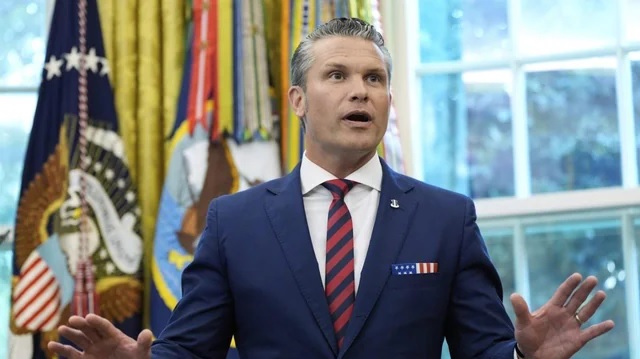
Secretary of War Pete Hegseth rejected claims Tuesday that Iran is developing dolphin-based weapons systems to threaten U.S. naval operations in the Persian Gulf, but stopped short of commenting on American capabilities in the same area.
“I can confirm they don’t,” Hegseth said when asked about Iranian programs during a Pentagon briefing.
The comments followed a Wall Street Journal report suggesting Iran has explored reviving Soviet-era marine mammal training programs that could deploy mine-carrying dolphins against shipping in the Strait of Hormuz.
Iran acquired trained dolphins from the Soviet Union in 2000, according to declassified reports. The animals were reportedly trained to carry mines and deliver attacks against enemy vessels.
Chairman of the Joint Chiefs Dan Caine said he had not heard of the Iranian dolphin program before the recent media reports.
“It’s like sharks with laser beams,” he said, referencing the 1997 film “Austin Powers: International Man of Mystery.”
The U.S. Navy has maintained a marine mammal training program for decades, though details of its operations remain classified.
Defense analysts said reports of Iranian interest in animal-based weapons systems suggest the regime is turning to unconventional tactics as its conventional military capabilities decline. Tehran has previously relied on naval mines, fast-attack boats, and drone strikes to threaten American interests in the Gulf region.
The Strait of Hormuz, through which roughly one-third of global maritime oil trade passes, remains a critical chokepoint that Iran has repeatedly threatened to disrupt.
(YWN World Headquarters – NYC)
Related stories
Matzav9 hours agoMatzav14 hours agoBelaaz16 hours agoYeshiva World News17 hours ago
 The Lakewood Scoop8 hours ago
Recently, there was a post on this site with the suggestion to carry a weapon. It seems there is a higher level of concern to actively protect ourselves, and a member of the community took it upon themself to write a letter about arming ourselves. Many of the commentors responded and within those comments was a reference to an Asifa where Rabbi Brudny, Rabbi Lieff and Rabbi Resiman spoke about this issue. Within the comments were people sharing their opinions on what may have been said, and even if it was said, almost how dare they say it. Some even questioned if the Rabbonim were aware of certain Pesukim and Halochos.
Personally, I think anyone who thinks they can question our Gedolai Rabbonim, or anyone who thinks their Klayna Keppala is entitled to an opinion about what our Rabbonim say, is a person that is silly, immature and might just think to highly of themselves.
Therefore, Letoeles Haklal, and especially for those Choshuva commentors who care enough to really hear what our Rabbonim of today have to say about Anti Semitism, about what our responsibility as Frum Torahdiga citizens of the USA is, and how we should or should not respond to the open attacks on Yidden, I am sharing below the links to that night on January 13, 2020 (after the attacks in Jersey city, Monsey, Pittsburgh, California and others) when these Rabbonim spoke, so that everyone can hear for themselves true Daas Torah on what our reactions should be and how to handle ourselves when feeling the threat of goyim.
If anyone wants to comment on this post and my letter, they most certainly can but only if you take the time to actually listen to each of the 3 speeches. Without that, then your comments are meaningless not just to me but to yourself. 1st listen, then speak.
Rav Elya Brudny
Rav Moshe Tuvia Lieff
Rabbi Yisroel Reisman
TLS welcomes your letters by submitting them to us via Whatsapp or via email [email protected]
 Vos Iz Neias8 hours ago
NEW YORK — Israel’s current beauty queen said an unexpected meeting with the wife of New York City’s mayor at a Brooklyn café ended awkwardly after an initially friendly exchange.
Melanie Shiraz said she briefly interacted with Rama Duwaji during a weekend visit to the city, describing the encounter as cordial at first before the tone shifted.
According to Shiraz, the interaction changed after she identified herself, and the conversation ended shortly afterward. She said she had hoped for a more substantive exchange.
Duwaji did not publicly comment on the encounter, and the office of Mayor Zohran Mamdani declined to address the report.
The account comes amid ongoing scrutiny of past social media activity linked to the mayor’s wife, which previously drew criticism and prompted a public apology.
Shiraz, who has been traveling in the United States for events and speaking engagements, said she advocates for dialogue despite disagreements.
 Vos Iz NeiasVos Iz Neias8 hours ago
(AP) – For people hurtling toward retirement, the standard personal finance advice is to continue to fund your retirement accounts as aggressively as you can, including taking advantage of catch-up contributions.
Those additional contributions can add up to a tidy sum in retirement, but after age 60, they have fewer years to compound, and the tax deferral isn’t as valuable. If your retirement numbers are in relatively good shape, however, consider these four spending strategies with a positive psychological payoff.
Strategy 1: Get ahead of big-ticket transactions
As retirement approaches, it’s helpful to forecast big-ticket outlays over the next two to five years, like home repairs or improvements or cars you’ll need to replace. If you’re still working, you can fund them out of cash flows rather than putting additional funds into your retirement accounts.
Pushing those big-ticket outlays into your working years has a psychological benefit. That’s because pulling money from your investment accounts can be fraught, especially in the early years of retirement, when you’re still getting your sea legs. That challenge can be especially acute for people who plan to delay Social Security; they’ll be drawing all of their cash flow needs from their portfolios in those years. Spending from working income is apt to be psychologically more palatable.
As you think through what you might want to spend on, lean into your vision of retirement. Will you pursue your passion for cooking? If so, splurging on new counters might be money well spent. If more road trips are in your future, lining up a safe, reliable set of wheels should be a priority.
Strategy 2: Pay down debt
The calculus on prepaying a mortgage usually boils down to which decision provides the better “return”: debt paydown (and the relief from the interest service that accompanies the debt) or investing in something that offers a similarly safe return.
It often depends on the prevailing interest rate environment. Today, many mortgage holders could reasonably earn more on their safe investments than they’re paying to service their debt. Consider liquidity and spending needs too. If paying off your mortgage would require you to crack into your retirement account and trigger a big tax bill, or leave you cash-strapped and less flexible in retirement, you’d want to think twice.
However, mortgage paydown is the ultimate “sleep at night” allocation, especially as retirement approaches, because it helps you skinny down your fixed expenses and adopt a flexible approach to your discretionary spending, which in turn can boost your lifetime retirement spending. I’ve yet to meet a single person who paid off a mortgage and regretted it.
Strategy 3: Build up liquid reserves in a taxable account
You can put as much into your taxable account as you wish, and you can also pull as much out, without strictures. Being able to spend from taxable accounts with minimal tax implications provides the leeway to pursue other worthwhile strategies in the early years of retirement, such as converting traditional IRA assets to Roth, for example.
But don’t overdo your allocations to safer assets in your taxable account. Cash has a low return relative to other assets regardless of where you hold it. You might not even outearn the inflation rate! I like the idea of retirees holding no more than two years’ worth of liquid reserves—CDs, money market mutual funds, and so on—across both taxable and tax-sheltered accounts.
Strategy 4: Splurge
If you’re in your 60s, it’s a good bet you know loved ones who were struck down in the prime of their lives, before they really had a chance to enjoy their retirements to the fullest. So why not lean into the big, fun experiences that you’ve been “saving” for retirement while you’re still working and healthy?
As Jamie Hopkins notes in my book How to Retire, the greater good in this case is that you’re continuing to work and earn an income, thereby forestalling portfolio withdrawals. If taking a few amazing trips a year or buying a vacation home now makes continuing to work more palatable and also helps you feel more comfortable with the splurges, then those allocations are well worth considering, even if they mean you have to pull back on your savings.
 Vos Iz Neias
Related stories
 Matzav2 days ago
 Matzav15 days ago
 Vos Iz Neias17 days ago
 Matzav17 days agoVos Iz Neias8 hours ago
WASHINGTON (AP) — President Donald Trump has renewed his criticism of Pope Leo XIV, potentially complicating a fence-mending visit that Secretary of State Marco Rubio plans to make this week to the Vatican.
In an interview with conservative commentator Hugh Hewitt, Trump said the first American-born pontiff is helping Iran and also making the world less safe with his comments about the importance of not treating immigrants with disrespect.
“The pope would rather talk about the fact that it’s OK for Iran to have a nuclear weapon,” Trump said in the interview on Monday. “And I don’t think that’s very good. I think he’s endangering a lot of Catholics and a lot of people.”
The pope, however, has not said Iran should obtain nuclear weapons. He’s called for more peace talks, and criticized war with Iran generally and Trump’s specific threats of mass civilian strikes. The pope also has emphasized that he’s reflecting biblical and church teachings, not speaking as a political rival to Trump.
Leo responded to Trump’s latest criticism by calling out the U.S. president’s misrepresentation of his views. Speaking to reporters Tuesday, the pope said the Catholic Church “for years has spoken out against all nuclear weapons, so there is no doubt there.”
He also doubled down on his insistence that his call for peace and dialogue in the U.S-Israeli war in Iran is biblically inspired.
“The mission of the church is to preach the Gospel, to preach peace. If someone wants to criticize me for announcing the Gospel, let him do it with the truth,” Leo said.
Rubio downplays the rift over Iran
For his part, Rubio, a practicing Catholic, said Trump’s recent criticisms were rooted in his opposition to Iran potentially obtaining a nuclear weapon, which he said could be used against millions of Catholics and other Christians. Rubio said the whole world should be opposed to that.
Trump “doesn’t understand why anybody — leave aside the pope — the president and I, for that matter, I think most people, I cannot understand why anyone would think that it’s a good idea for Iran to ever have a nuclear weapon,” Rubio told reporters at the White House.
Still, Trump’s latest comments may make Rubio’s task more difficult when he sees the pontiff on Thursday. Rubio has often been called on to tone down or explain Trump’s harsh rhetoric as it relates to Europe, NATO and the Middle East, but the president’s dispute with the pope has domestic political implications in the U.S. with midterm congressional elections approaching.
Trump lashed out at Leo on social media last month, saying the pope was soft on crime and terrorism for comments about the administration’s immigration policies and deportations as well as the Iran war. Leo then said God doesn’t listen to the prayers of those who wage war.
Later, Trump posted a social media image likening himself to Jesus Christ, which he then deleted after backlash. He has refused to apologize to Leo and has sought to explain away the social media post by saying he thought the image was of him as a doctor.
The tension spills over into Italian politics
Italian Prime Minister Giorgia Meloni, a long-time Trump ally, has taken exception to Trump’s comments about the pope.
Trump in return criticized her as his ire against NATO allies expands over what he sees as a lack of support for the Iran war — most recently with the Pentagon planning to pull thousands of troops out of Germany in the coming months.
In response to Trump’s latest comments criticizing the pope, Italian Foreign Minister Antonio Tajani said in a social media post that they were “neither acceptable nor helpful to the cause of peace.”
“I reaffirm my support for every action and word of Pope Leo; his words are a testament to dialogue, the value of human life, and freedom. This is a vision shared by our government, which is committed through diplomacy to ensuring stability and peace in all areas where conflicts exist,” Tajani wrote.
Rubio, who after this trip will have visited Italy or the Vatican at least three times in the past year, is expected to meet with Meloni and Tajani on Friday.
Related stories
Matzav2 days agoMatzav15 days agoVos Iz Neias17 days agoMatzav17 days ago Vos Iz Neias8 hours ago
New York (VINNEWS/Rabbi Yair Hoffman) Anyone who learns Shas runs sooner or later into a sugya in which Chazal describe the natural world in a way that seems to not quite match either what we see in front of us or what the secular world tells us. A classic flashpoint is killing lice on Shabbos. The Gemara in Shabbos 107b permits it on the assumption that lice do not reproduce through a form of pru urvu but emerge from sweat and dust. Modern biology disagrees. So what does a ben Torah do with that?
Over the centuries, Rabbonim have approached the question in roughly five different ways. Some communities lean heavily on one approach; others rotate between them depending on the sugya. Each has its defenders among gedolim, and each has its detractors. None of them is a casual position to hold.
Each of these approaches has been taught and held by serious Rabbonim. The author’s own view is that most of them deserve respect, and that a thoughtful Jew should feel free to choose the one he or she finds most compelling—with the possible exception of #2, which has historically generated more heat than light. The point is not to flatten the question but to recognize that Klal Yisrael has always had room for multiple legitimate ways of holding the tension between Torah and the world.
With that landscape laid out, it is worth taking a careful look at how the Baalei HaTosafos handled the question. Their answer is not the only one. But it is one of the earliest and most influential, and it shows clearly what option #4 looks like when it is taken seriously.
In three places in Shas and on three different topics, the Baalei haTosafos go on record that nishtaneh haʼteva—nature itself has changed since the time of Chazal. In each case there is a real-world observation driving the move; Tosafos are not invoking the principle in the abstract.
Fish freshly caught (Moed Katan 11a). The Gemara records, in the name of Ada the fisherman, that kavra samuch limsricha maʼali—the fish is best eaten close to the time of its salting, rather than the moment it is pulled from the water. Modern food science actually maps this onto a real phenomenon. A freshly killed fish enters rigor mortis within hours; during rigor, the muscle is taut and the texture is poor. As the fish ages and enzymes begin to break down the proteins, the flesh softens and the flavor develops. A short delay between catch and consumption—the kind that natural salting and transport once enforced—really does improve the fish. Eat it too early, and you are eating it in rigor; wait too long, and bacterial spoilage takes over. There is a window. Ada the fisherman, by all accounts, knew that window.
By the time of Tosafos, however, the empirical reality on the ground had reversed. People in their day reported that fresh-caught fish was the safe option and that fish that had sat for a while was the one that made you sick. Whether the relevant species had changed, whether the methods of preservation had changed, or whether human bodies had become more vulnerable to whatever toxins or parasites were involved, the practical equation no longer matched what the Gemara had described. Tosafos (s.v. kavra) write: “In this time people consider it dangerous to eat fish immediately upon being caught… perhaps the natures have changed, just as the medical remedies recorded in the Talmud are no longer effective in our day.” Either the species of fish itself shifted, or the human bodies eating it shifted; either way, the Gemaraʼs guidance no longer matched the world the baalei haTosafos lived in.
When a cow first gives birth (Bechoros 19; Avodah Zarah 24b). The Mishnah in Bechoros 3:1 rules that a cow purchased from a non-Jew, if it is under three years old, may be presumed to have never given birth—so any offspring it bears is a bechor. The premise is biological. A cow, on the Mishnahʼs picture, simply does not reach reproductive maturity early enough to calve before its third year; if it has a calf at age three, that calf is, by definition, the first. Modern animal science would treat this as a question of age at “first parturition”, which depends on breed, nutrition, climate, and management. Ancient Near Eastern cattle—smaller-framed and less intensively fed than what we would recognize today as dairy stock—may indeed have reached calving age later than the cattle that the baalei haTosafos saw in medieval Europe. Selective breeding alone, even before the modern era, can pull the average age of first calving down by a year or more.
Tosafos in Avodah Zarah point to what was, in their day, an everyday observation: cows were routinely seen giving birth at age two. Their answer: “It must be that the times have now changed from how they were in the early generations.” In earlier generations, Tosafos hold, cows really did wait three years; in their own day, the gestational and reproductive maturity of the animal had shifted. The biology had moved.
The lobes of the lung (Chullin 47a; Avodah Zarah). In the laws of treifos, the Gemara discusses the inunisa dʼvarda—the rose-shaped lobe of the lung—and treats it as an unusual feature, present only in some animals. The basic anatomical question is how many lobes a kosher animalʼs lung is supposed to have, and which deviations render the animal a treifah.
A modern veterinarian would describe a cow lung as having a fixed lobar pattern—cranial, middle, and caudal lobes on each side, plus an accessory lobe—with the small extra lobule, what shochtim call the varda, varying in size and prominence from animal to animal and even from breed to breed. When Tosafos opened the chest cavity of the cattle in front of them, however, they found that the rose-shaped lobe was not unusual at all—it was standard equipment in every animal they examined. Tosafos in Chullin note that no proof can be drawn from the animals available to them, since their vascular structure differs from that described in the Gemara, and Tosafos in Avodah Zarah state plainly that “nowadays this external lobe is found in all our animals.” Cow anatomy itself, they conclude, has shifted between the time of Chazal and their own time.
Three points are worth highlighting about how Tosafos handle these cases.
First, Tosafos do not merely use nishtaneh haʼteva as a way to defend the honor of the Gemara in the abstract. They actually allow the change in nature to reshape practical halacha. Once cows are observed to give birth before age three, the absolute presumption that any first birth at age three is a bechor no longer holds; the kohen would now have to bring positive proof of firstborn status, and one would also have to be concerned about the possibility of crossbreeding. Tosafos take the change seriously enough to let it move the line of practical psak.
Second, Tosafos could easily have avoided the whole nishtaneh haʼteva claim. The Mishnah in Bechoros can be read in another way: not that cows biologically cannot give birth before three, but that we are simply unwilling to assume two births within so short an interval. Had Tosafos adopted that mehalech—which Rashi in fact uses elsewhere—there would have been no need to invoke a change in nature at all. The fact that Tosafos rejected that reading as forced, and chose instead to suggest an actual shift in the natural world, tells us how seriously they took the empirical evidence in front of them.
Third, Tosafosʼ approach was not unanimous, even among the Rishonim. The Tosafos of Rabbeinu Elchanan (Avodah Zarah 62b) extends and embraces it: “It seems to me that nowadays one finds animals giving birth within two years of their own birth, and we find in the Talmud that the natures have changed from what they once were—just as in the case of the inunisa dʼvarda, which exists in all our animals, whereas in their animals it was found only in a baraisa.” But others hesitated, and the Yaavetz (Shʼeilas Yaavetz I:81) argued forcefully against the very move, holding that early births are simply rare (milsa dʼlo shechicha) and we follow the rov—the majority. Even within the camp that, broadly, accepts approach #4, there is a genuine spread of opinion about how aggressively to deploy it.
The Tosafos material is not a knockdown argument for nishtaneh haʼteva as the only legitimate response to the science-and-Chazal question. It is, however, a powerful illustration of what option #4 looks like in the hands of Rishonim who are committed both to the integrity of the Gemara and to honest engagement with the world they live in. They say neither that the science is wrong, nor do they say Chazal were wrong. They say, simply, that the world Chazal described was the world Chazal saw, and that the world has since shifted.
The author would also point out that Rav Dovid Feinstein zatzal’s approach in conversation, as well as Rav Yisroel Belsky zatzal’s approach, were not to make waves about the five different approaches but that those working in Kiruv should present the various approaches, explaining that each have supporters and detractors.
The author can be reached at [email protected]
 Vos Iz Neias
Related stories

 Jewish Breaking News13 hours ago
 Jewish Breaking News11 days ago
 Jewish Breaking News2 months agoVos Iz Neias8 hours ago
LONDON (AP) — Four Palestine Action activists were convicted Tuesday of breaking into an Israeli defense factory in the U.K. and smashing equipment with sledgehammers and crowbars.
Jurors in Woolwich Crown Court found Charlotte Head, Samuel Corner, Leona Kamio and Fatema Rajwani guilty of criminal damage. They face sentencing June 12.
The attack was one of the events that led the government to ban the group as a terrorist organization. London’s High Court said that decision was unlawful, but has kept the ban in place while the government appeals.
The group said they wanted to dismantle drones and weaponry they believed would be used to kill people.
Head was behind the wheel of a van that crashed through the gates of the Elbit Systems factory in Bristol on Aug. 6, 2024.
The four activists, dressed in red jumpsuits, began destroying property before ending up in a fight with security guards and police that left one officer with a broken back.
Prosecutor Deanna Heer said the attack was “meticulously organized” to cause maximum damage and get information about the company. The raid caused an estimated 1 million pounds ($1.36 million) in damage.
Corner was also convicted of inflicting grievous bodily harm for striking police Sgt. Kate Evans twice in the back with a sledgehammer, fracturing her spine.
Two others, Zoe Rogers and Jordan Devlin, were acquitted of criminal damage.
The convictions followed a previous trial in which jurors acquitted the six of aggravated burglary but could not reach verdicts on criminal damage charges.
Related stories
Jewish Breaking News13 hours agoJewish Breaking News11 days agoJewish Breaking News2 months ago Matzav
Related stories
 Vos Iz Neias1 day ago
 Matzav1 day ago
 Vos Iz Neias2 days ago
 Matzav5 days agoMatzav8 hours ago
A California man accused of opening fire near the White House Correspondents’ Dinner has been formally indicted on multiple federal charges, including attempting to assassinate President Donald Trump, according to newly released court documents.
Prosecutors charged Cole Allen with four felony counts: attempt to assassinate the President of the United States, assaulting a federal officer with a deadly weapon, transporting a firearm, and discharging a firearm during a violent crime. If convicted on the most serious charge, he could face a sentence of life in prison.
Authorities allege that Allen approached a security checkpoint armed with two firearms and several knives on an upper level of the venue, just one floor above where the high-profile dinner was taking place on April 25. President Trump, First Lady Melania Trump, and senior members of the administration were attending the event at the time.
Federal officials say Allen began shooting and struck a Secret Service agent, who was protected from serious injury by a bulletproof vest.
Law enforcement officers apprehended Allen at the scene, and the event was immediately evacuated as a precaution.
Allen, a resident of Torrance, California, has not yet entered a plea in the case.
During a court appearance on Monday, the presiding judge expressed regret over the conditions of Allen’s detention, noting he had been held under strict restrictions while on suicide watch. The judge’s remarks came after defense attorneys argued that their client did not pose a physical threat to himself.
{Matzav.com}
Related stories
Vos Iz Neias1 day agoMatzav1 day agoVos Iz Neias2 days agoMatzav5 days ago Vos Iz Neias
Related stories
Vos Iz Neias8 hours agoCONCORD, N.H. (AP) — A Federal Aviation Administration employee in New Hampshire is accused of sending an email to the White House threatening to kill President Donald Trump after using his work computer to research assassination attempts and related topics.
Dean DelleChiaie, 35, of Nashua, was expected to make an initial court appearance Tuesday on a charge of interstate communication of a threat against the president. According to federal prosecutors, he sent a message April 21 using his personal email account in which he identified himself and said he was going to “neutralize/kill” the president.
That came nearly three months after police and U.S. Secret Service officers questioned DelleChiaie about searches made on his computer at the FAA, where he was employed as a contractor involved in mechanical engineering.
According to court documents, DelleChiaie used his work computer in January to search for information about how to get a gun into a federal facility, the percentage of the population that wants the president dead, the location of the vice president’s home and the names of his children. He later asked the FAA’s information technology department to delete his search history, but the department instead reported the request to authorities, and DelleChiaie was suspended.
When interviewed at his home Feb. 3, DelleChiaie admitted to making the searches and was remorseful, Secret Service Special Agent Nathaneal Gamble wrote. He also told investigators he owned three guns, was depressed and that while he was upset with the Trump administration, he had no interest in assassinations.
DelleChiaie, whose attorney did not immediately respond to a phone message seeking comment, was arrested Monday, just over a week after a gunman tried to storm the White House Correspondents’ Association dinner with guns and knives. Cole Tomas Allen has been charged in that incident, in which a Secret Service officer who was wearing body armor was shot but not seriously injured.
 Vos Iz Neias
Related stories
 Vos Iz Neias3 days ago
 Matzav3 days ago
 Belaaz3 days ago
 Matzav3 days agoVos Iz Neias9 hours ago
(AP) – The bright yellow planes are grounded. Now the selloff begins.
Spirit Airlines, which abruptly canceled all its future flights over the weekend, secured court approval Tuesday to begin dismantling the once-busy budget carrier and to convert its parts into cash for creditors.
U.S. Bankruptcy Judge Sean Lane authorized the airline’s plan for a rapid wind down of its remaining business activities, clearing the way for Spirit to move forward with liquidation.
“Today is a very challenging day. It’s not a day that anybody hoped would ever come,” Lane said as he ruled from the bench following an hourslong hearing in New York. The judge extended his “sympathy to the Spirit employees and their families.”
The company needed the judge’s clearance to proceed because ceasing operations due to insolvency is legally complex. Its plan centers on selling off every possible Spirit asset — from airplanes, engines and spare parts to gates and landing slots at airports — and for limiting additional payroll, leasing and other costs.
The liquidation marks a dramatic turn for Spirit, which filed for bankruptcy protection in August 2025 hoping to escape financial ruin. The airline’s parent company was attempting to restructure the business for the second time since November 2024 when it abruptly stopped operating flights early Saturday.
The shutdown itself was tightly choreographed. The company, Spirit Aviation Holdings Inc., said it made its going-out-of-business announcement in the middle of the night to ensure the jetliners making their final runs for the airline were safely on the ground and their crews accounted for.
Three days later, that sense of urgency carried into the courtroom, where the company’s lawyers asked the judge for expedited approval of their wind-down plan, arguing that speed would benefit Spirit’s creditors and customers.
“Any delay will cause chaos, confusion and cost the estate significant time and money,” one motion stated, noting the airline was “not generating any revenue.”
Spirit attorney Marshall Huebner said Tuesday in court that rising jet fuel costs since the U.S. and Israel launched strikes on Iran “engulfed Spirit entirely.”
The airline’s fuel expenses grew by roughly $100 million “in March and April alone,” Huebner said, and rapidly drained Spirit’s liquidity and derailed its restructuring efforts.
He also apologized directly to Spirit’s employees and customers, especially passengers who he said may now be completely “priced out” of certain routes without the ultra low-cost carrier.
Huebner described a swift effort by other airlines and other segments of the aviation industry to assist Spirit’s employees and customers once the airline’s end looked inevitable.
“The entire industry sprang into action to get our people home,” Huebner said. Spirit employed about 17,000 people and carried about 50,000 passengers on its final day of operations. The final flight, which traveled from Detroit to Dallas, landed after midnight Saturday.
According to legal filings, Spirit’s assets include its fleet of 114 Airbus A320-family planes. Most of them — 66 aircraft — were leased, but the company owns 28 that will be part of the liquidation process. Another 20 of the planes it owns outright were already set to be sold under a separate, previously approved court deal. Spirit also owns 18 spare engines.
Spirit says it plans to initially keep a skeleton crew of 130 to 150 employees who will help oversee the liquidation process, including securing aircraft and coordinating logistics. The team, expected to include some corporate officers, will eventually shrink to roughly 40.
In the last two weeks, Spirit was in discussions with the Trump administration about a hoped-for rescue deal that fell through, eliminating what the company described as its last viable path forward. Of the potential bailout, Transportation Secretary Sean Duffy said Saturday, “We oftentimes don’t have half a billion dollars laying around.”
Duffy said other U.S. airlines, including United, Delta, JetBlue and Southwest, were offering $200 one-way fares for a limited time to travelers holding Spirit confirmation numbers and proof of purchase.
Airlines also stepped in to assist stranded Spirit crew members, he said, with some offering a preferential hiring process for former Spirit employees looking for work.
Related stories
Vos Iz Neias3 days agoMatzav3 days agoBelaaz3 days agoMatzav3 days ago Vos Iz Neias9 hours ago
WASHINGTON (AP) — Washington interim Police Chief Jeffery Carroll said Tuesday that 13 officers have been placed on administrative leave in connection with an internal investigation into how the department keeps crime statistics, a subject that also has been looked into by Congress and the U.S. Attorney’s Office.
Speaking at a press conference on Tuesday, Carroll said the officers were placed on administrative leave on Monday following an investigation that began earlier this year after a referral from the U.S. Attorney’s Office.
He declined multiple times to talk about the specifics of the investigation. “What I can tell you is there were allegations of misconduct that were made, and based on those allegations, members were investigated, and the outcome is related to these individuals,” he said.
Carroll said none of the officers had been fired and explained they have administrative rights, including asking for an “adverse action panel” made up of high-ranking officers who hear the evidence and determine whether any discipline is necessary. “The administrative process must be allowed to take its course, and that process is outlined in our MPD general orders,” Carroll said.
The police force’s crime statistics collection has faced widespread scrutiny in the past year, following a decision by President Donald Trump to issue a monthlong emergency order last summer that federalized the police force and launched a federal law enforcement operation in the nation’s capital that his Republican administration said was meant to fight crime.
Trump continuously touted the drop in crime during and after the surge as proof that the operation made the city the safest in the country. Washington Mayor Muriel Bowser and other city officials say crime was already trending downward.
Republicans and the administration responded by questioning whether the data was being manipulated, which limited the success of the surge. The House Committee on Oversight and Government Reform and the Justice Department conducted separate investigations.
A report released in December by the House Committee found that then-police Chief Pamela Smith often threatened, punished and retaliated against police commanders who presented her with “spikes in crime.” The police chief in the nation’s capital pressured subordinates to manipulate department data to artificially lower the city’s crime rates, according to the report by the Republican-led congressional committee.
A separate investigation by U.S. Attorney Jeanine Pirro’s office also found that a significant number of MPD reports had been misclassified to make crime rates appear lower than they are. Neither investigation found grounds to charge anyone with a crime. Pirro said at the time it was up to the MPD to take steps to address “these underlying issues.”
James Comer, chairman of the House oversight committee, said in a statement that the department’s personnel decision on the manipulation of crime data was “a step in the right direction.” But, Comer said, the action only confirmed the work of his committee and he expected “to receive MPD’s internal report and all related documents to ensure crime data is reported accurately and that anyone responsible for manipulation is held accountable.”
Carroll, who took over as interim chief in December, said Tuesday that assessments and training were underway for officers on how to submit data. He added that the internal investigation would not be released publicly.
The chief said that the department had been successful in reducing crime over the last three years, especially in homicides, shootings and carjacking.
“We use crime statistics every day to help us with deployment across the city. I do have confidence in those numbers,” he said.
Bowser also called for an independent investigation by the city’s inspector general. That probe began in January.
 Vos Iz Neias9 hours ago
WASHINGTON (AP) — The Food and Drug Administration on Tuesday announced its first authorization of fruit-flavored electronic cigarettes intended for adult smokers, a major policy shift that comes after months of appeals to President Donald Trump from the vaping industry.
The decision is certain to be opposed by health groups and parent organizations that have long pointed to flavors as the driver behind underage vaping in the U.S. But the federal action comes as teen vaping rates have dropped to a 10-year low and manufacturers have pushed the Republican administration to loosen restrictions on their products.
Vaping companies have long made the case that their products can help blunt the toll of smoking among adults, which is blamed for 480,000 U.S. deaths annually due to cancer, lung disease and heart disease. The battery-powered devices have been sold in the U.S. since 2007, but their potential benefits have been overshadowed for years by uptake among middle and high school students.
The newly authorized e-cigarettes come in mango, blueberry and two varieties of menthol. Los Angeles-based vaping company Glas Inc. plans to market the flavors under the names Gold, Sapphire, Classic Menthol and Fresh Menthol, according to the FDA release.
Previously the FDA had only granted permission to tobacco or menthol-flavored vaping products. Most e-cigarettes OK’d by regulators come from large manufacturers, including Juul and Altria.
Tuesday’s announcement is not an approval or endorsement, and the FDA reiterated that the Glas vapes are only intended for adults interested in quitting or cutting back on cigarettes.
The FDA suggested the company’s digital age-verification system makes it unlikely the products will be picked up by underage users. Users must first verify their age with a government ID on their cellphone. The e-cigarettes can then only be used when connected via Bluetooth to the phone of the verified user.
The FDA’s OK of the new fruity products will be “a key test case,” said Kathy Crosby of the Truth Initiative, an anti-tobacco nonprofit.
“Ultimately, it’s critical that we remain vigilant in protecting young people, including closely monitoring the use of authorized products,” Crosby said in an emailed statement.
As a presidential candidate, Trump vowed to “save” vaping and won backing from e-cigarette companies, shop owners and vaping enthusiasts.
Under President Joe Biden, the FDA denied more than a million marketing applications for candy- or fruit-flavored products, part of a wider crackdown that is credited with helping drive down teen vaping after a surge in 2019. During his first administration, Trump put in place the first flavor restrictions on e-cigarettes and raised the age for purchasing all tobacco products from 18 to 21.
But action on vaping and other tobacco policies has largely taken a backseat under FDA Commissioner Marty Makary, who has focused on a slate of other priorities, including restricting COVID-19 vaccines, phasing out artificial food dyes and speeding up approval of some innovative drugs.
Groups such as the Vapor Technology Association have met with administration officials in recent weeks calling for more action on flavors.
In March, the FDA released its first-ever guidance to industry on flavors, stating that menthol, coffee, mint and spice flavors could have a role in appealing to adult smokers. The same document also reiterated the risks of sweeter flavors that tend to appeal to teens, such as fruit, candy and dessert flavors.
The vast majority of U.S. teens who vape continue to use unauthorized fruit- and candy-flavored products, according to the latest government data. Those products are technically illegal but remain widely available in cheap, disposable brands typically imported from China.
 Matzav
Related stories
Matzav7 days ago Vos Iz Neias8 days ago
 Vos Iz Neias9 days agoMatzav19 days agoMatzav9 hours ago
Senate Republicans late Monday proposed $1 billion to pay for new White House security measures, with lawmakers and White House officials disagreeing over whether the legislation would cover President Donald Trump’s planned ballroom.
Sen. Chuck Grassley (R-Iowa), chairman of the Senate Judiciary Committee, laid out a funding package for security upgrades related to the “East Wing Modernization Project,” the Trump administration’s name for its planned 90,000-square-foot project to rebuild the East Wing that Trump demolished last year.
The proposed legislative text says the money would be used for both aboveground and underground security features that the administration has declined to fully detail. The text explicitly says the money could not be used for “non-security elements” of the project, a reference to Trump’s planned ballroom.
“This bill does not fund ballroom construction,” Grassley spokeswoman Clare Slattery said in a statement. “It provides funds for Secret Service enhancements that will ensure all presidents, their families and their staffs are adequately protected.”
The legislative proposal comes amid a legal battle over whether the project can proceed, with U.S. District Judge Richard Leon last month ordering a halt to aboveground construction on the ballroom unless Congress authorizes the project, saying that work related to national security can continue. An appeals court panel has stayed Leon’s order while it considers the case.
Construction on the project continues apace. Photos taken in the past week show crews have erected a concrete structure topped with columns of exposed rebar, used to reinforce pillars that will support additional floors.
White House officials said Tuesday that the legislation, if enacted, would authorize the entire project – including the aboveground ballroom.
“Congress has rightly recognized the need for these funds,” White House spokesman Davis Ingle said in a statement, citing the high-profile incident last month when a gunman stormed through the security checkpoint outside the White House correspondents’ dinner. “The proposal would provide the United States Secret Service with the resources they need to fully and completely harden the White House complex, in addition to the many other critical missions for the USSS.”
The legislation would be included in the Senate’s planned budget reconciliation bill, which can be enacted with a simple majority, bypassing any potential filibuster and eliminating the need for Senate Republicans to court Democratic votes.
Before it advances, the Senate parliamentarian will review the White House security proposal to ensure it complies with rules limiting what can be included in reconciliation bills. Only provisions related to spending or generating revenue can be included.
The larger proposed reconciliation bill also includes $38.2 billion for Immigration and Customs Enforcement, $26 billion for Customs and Border Protection, $1.5 billion for the Department of Justice, and $5 billion for other border security, immigration and law enforcement efforts.
It would allow the administration to use the money through the end of September 2029, ensuring the agencies are funded through the end of Trump’s term.
White House officials have previously maintained that the ballroom, which Trump has said could cost $400 million, would be entirely funded by private donors and not come at taxpayers’ expense. Republicans on Tuesday said that security measures for the project should not be the responsibility of private donors, and they expect their proposal would provide sufficient funds to secure the facility.
Trump has argued that the ballroom itself is a needed national security measure so he and future presidents can safely entertain VIP guests, a message increasingly echoed by his allies in Congress after last month’s incident. Justice Department officials last week asked Leon to dissolve his order blocking construction, citing the shooting at the correspondents’ dinner in a rambling legal filing that read like one of Trump’s Truth Social posts.
The National Trust for Historic Preservation, the organization that sued the administration in December to block work on the project, has been skeptical of the security rationale. Lawyers representing the National Trust, a nonprofit charged by Congress with protecting historical buildings, noted that Trump continues to live at the White House and entertain foreign dignitaries despite the administration’s claims that the current situation poses a security risk.
“Your assertion that this lawsuit puts the President’s life at ‘grave risk’ is incorrect and irresponsible,” Gregory Craig, a Foley Hoag lawyer representing the National Trust, wrote to Justice Department lawyers last week. “Simply put, this case does not jeopardize the President’s safety in any way.”
Democrats argued Tuesday that the proposal illustrates that Republicans are out of touch with voters’ needs, highlighting the broadly unpopular ballroom. Fifty-six percent of Americans oppose Trump’s decision to tear down the White House’s East Wing to make way for his planned ballroom, funded by about $400 million in private donations, while 28 percent support the project, according to a Washington Post-ABC News-Ipsos poll conducted last month.
Sen. Jeff Merkley (D-Oregon), the top Democrat on the Senate Budget Committee, said in a statement that Republicans “are ignoring the needs of middle-class America and instead funneling money into Trump’s ballroom and throwing billions at two lawless agencies.”
The legal fight over the ballroom’s construction, which initially focused on whether Trump had authority to pursue the project, has increasingly revolved around arguments about national security and the president’s safety. Since litigation was filed nearly five months ago, Justice Department lawyers have argued that work must continue on national security grounds, saying that any pause could imperil Trump, his family and White House staff. They have said the proposed building is designed to defend against “hostile attacks via drones, ballistic missiles, bullets, biohazards” and other potential threats while Trump has said crews are building a “massive complex” of secure underground facilities beneath it.
Leon has been unpersuaded, ruling twice that the administration has failed to justify the national security reasons for why the ballroom is needed immediately.
(c) 2026, The Washington Post · Dan Diamond, Jonathan Edwards, Riley Beggin
Related stories
Matzav7 days agoVos Iz Neias8 days agoVos Iz Neias9 days agoMatzav19 days ago The Lakewood Scoop9 hours ago
A new bill aiming to help offset the cost of minimum wage increases while also expanding job opportunities for young people across New Jersey was introduced today by state Senator Troy Singleton.
The proposal would provide refundable tax credits to businesses in the state that employ workers under the age of 18, allowing employers to claim credits against either their corporate business tax or gross income tax based on the number of hours those employees work.
Singleton, a Democrat representing Burlington County, said the measure is designed to preserve entry-level job opportunities for teenagers as the state’s minimum wage continues to increase.
“For many young people, a first job is more than just a paycheck,” Singleton said in a statement. “It’s an introduction to responsibility, confidence, and long-term career pathways. As we continue to raise the minimum wage, this legislation ensures that businesses can still afford to hire young workers.”
Supporters say the measure could help small businesses manage increased labor costs while maintaining access to part-time and seasonal positions often filled by teenagers. The bill also aims to strengthen the state’s long-term workforce pipeline by encouraging early employment opportunities.
 Jewish Breaking News10 hours ago
The search for Israeli traveler Tevel Shabtai ended in tragedy in northern Japan after rescue teams found a woman’s body on Mount Asahidake in Hokkaido. Magnus Search and Rescue identified her as Shabtai, from Modi’in, while Japanese police said they were still completing formal identification and reviewing the circumstances.
Snow-capped peak and autumn woodland Daisetsuzan
Shabtai had been traveling alone as part of a longer trip. Before the climb, she told her mother in Israel that she planned to hike Mount Asahi, then contact was lost. Her mother alerted the Israeli Embassy in Japan, which passed the report to local police; investigators later found that a woman believed to be Shabtai had used the ropeway and registered at the reserve before entering the hiking route.
Mount Asahidake is Hokkaido’s highest peak, a 2,291-meter volcano inside Daisetsuzan National Park. The mountain is accessible by ropeway, but the terrain can turn dangerous fast: snow and ice remain a major factor for much of the year, and search teams faced snow, strong winds and temperatures around freezing to minus 5 Celsius.
Japanese police, rescue crews, volunteers and a helicopter assisted in the operation. Magnus said it is continuing to accompany the family and help with the process of bringing Shabtai back for burial in Israel. The cause of death has not yet been publicly confirmed.
 Vos Iz Neias10 hours ago
HANOVER, PA. (VINnews) – Utz Quality Foods LLC has voluntarily recalled certain limited varieties of its Zapp’s and Dirty brand potato chips due to a possible salmonella contamination in an ingredient, the U.S. Food and Drug Administration announced Monday.
The recall stems from a supplier’s recall of dry milk powder used in the seasoning for the affected chips. California Dairies, Inc. issued the ingredient recall over potential salmonella presence. Although the seasoning batches tested negative for the bacteria before use, Utz is proceeding out of an abundance of caution, the company said.
No illnesses have been reported in connection with the products, according to the FDA and Utz.
The recall affects specific sizes and flavors of Zapp’s and Dirty potato chips sold nationwide. Affected products include:
Various sizes of Zapp’s Bayou Blackened Ranch Potato Chips
Zapp’s and Dirty Salt and Vinegar Potato Chips
Dirty Maui Onion Potato Chips
Zapp’s Big Cheezy Potato Chips
Dirty Sour Cream and Onion Potato Chips
Consumers should check for specific best-by dates and batch codes listed in the full recall notice on the FDA website.
Salmonella can cause serious and sometimes fatal infections, particularly in young children, the elderly and people with weakened immune systems. Healthy individuals may experience fever, diarrhea, nausea, vomiting and abdominal pain.
The products should not be consumed. Consumers with questions or seeking refunds can contact Utz Customer Care at [email protected] or 1-877-423-0149, Monday through Friday from 9 a.m. to 6 p.m. Eastern Time. Retailers are advised to remove the items from shelves.
This recall is being conducted with the knowledge of the FDA.
 Jewish Breaking News10 hours ago
Israel is moving to supply Germany with jet fuel after Berlin asked for help amid the worsening energy crisis around the Strait of Hormuz, turning Israel from a front-line military target into an emergency energy partner for Europe’s largest economy. The step was approved by Energy and Infrastructure Minister Eli Cohen and Foreign Minister Gideon Sa’ar, following a German Energy Ministry request for assistance with jet fuel and possible natural gas support.
BERLIN, GERMANY – MAY 05: German Foreign Minister Johann Wadephul and Israeli Foreign Minister Gideon Sa’ar hold a joint press conference at the Federal Foreign Office in Berlin, Germany, on May 05, 2026. (Photo by Halil Sagirkaya/Anadolu via Getty Images)
Israel’s Energy Ministry said a review by its fuel administration found production surpluses that can be exported, subject to the security situation. The cargoes will be coordinated with refineries, while the ministry also examines whether Israel can help Germany on natural gas supply. Sa’ar informed German Economy and Energy Minister Katherina Reiche during his visit to Berlin, framing the move as part of the close economic and energy relationship between the two countries.
The decision lands at a tense moment. Shipping through Hormuz remains severely disrupted, with Reuters reporting that hundreds of commercial vessels and up to 20,000 seafarers have been unable to transit the waterway as the U.S. works to reopen passage. Before the war with Iran, roughly 20% of global oil supplies moved through the strait daily.
Germany has publicly insisted it is not facing an immediate jet fuel shortage, but officials have also been monitoring the pressure closely as aviation fuel prices have more than doubled and airlines warn of possible disruptions. German government confirmation of Israel’s latest supply announcement has not yet been issued, but the message from Jerusalem is clear: while Iran squeezes a global energy chokepoint, Israel is helping keep allied economies moving.

 Matzav
Related stories
 Yeshiva World News22 hours ago
 Matzav1 day ago
 Matzav1 day ago
 Matzav2 days agoMatzav11 hours ago
An unusual and urgent meeting between Prime Minister Benjamin Netanyahu and U.S. Ambassador Mike Huckabee has raised questions about whether military action against Iran may be approaching, as tensions in the Persian Gulf continue to escalate.
According to a report by Kan News, Huckabee arrived at the Prime Minister’s Office in Yerushalayim on Sunday for what was described as a high-priority meeting. The timing of the meeting, considered highly irregular in diplomatic terms, points to the urgency of ongoing security coordination between Israel and the United States amid growing concerns over Iran.
The report, by journalist Gili Cohen, noted that holding such a meeting on a Sunday—typically a day of rest for U.S. government officials—deviates from standard diplomatic protocol. The decision to proceed regardless underscores the significance of the issues under discussion.
The talks come as both countries prepare for the possibility of renewed direct confrontation with Iran. While officials in Washington have publicly stated that recent Iranian attacks do not yet constitute “grounds for a strike” inside Iranian territory, behind the scenes the level of alert remains extremely high.
President Donald Trump reiterated in remarks from the White House that “we cannot allow Iran to obtain nuclear weapons,” describing Tehran’s current military situation in stark terms.
The U.S. Embassy declined to provide details about the content of the Netanyahu-Huckabee meeting. A spokesperson stated that it is official policy not to comment on private diplomatic discussions.
The rising tensions follow a series of Iranian attacks in the Gulf. Iran reportedly launched 12 ballistic missiles toward the United Arab Emirates, along with cruise missiles and drones. Air defense systems intercepted some of the projectiles, but a fire broke out at oil facilities in Fujairah, and three Indian nationals were moderately injured.
According to additional reports, the Trump administration had opened a backchannel with Iran and informed it in advance about the planned military operation in the Strait of Hormuz. A senior U.S. official said the message was delivered on Sunday and included details about “Project Freedom,” along with a warning not to interfere with the American effort.
Despite that warning, Iran responded with force. On the first day of the operation, Iranian forces reportedly carried out multiple attacks against U.S. naval vessels and commercial ships in the strait. Israeli and American defense officials now assess that if diplomatic efforts remain stalled, further military steps could be authorized by President Trump.
A senior Israeli official told CNN that “the intention would be to carry out a short operation aimed at increasing pressure on Iran to make additional concessions in negotiations,” as coordination between Israel and the United States continues against the backdrop of intensifying tensions in the region.
{Matzav.com}
Related stories
Yeshiva World News22 hours agoMatzav1 day agoMatzav1 day agoMatzav2 days ago Vos Iz Neias11 hours ago
CARROLLTON, TEXAS (VINnews) – A 69-year-old man opened fire during a business meeting at a shopping center in the Koreatown area of Carrollton on Tuesday, killing two people and wounding three others, authorities said.
The shooting occurred shortly before 10 a.m. at K Towne Plaza, near the Gwangjang Korean Market parking lot in the 4000 block of Highway 121, about 20 miles north of Dallas, Carrollton Police Chief Roberto Arredondo said.
Police said the attack was not random and that the victims knew the suspect. All five victims were adults. Two were pronounced dead at the scene, and the three injured were hospitalized and expected to survive.
The suspect, identified as Seung Han Ho (also reported as Seung Hang Ho or Sung Ho Han), fled on foot and was arrested after a brief chase about 4 miles away at a grocery store, authorities said.
Video posted online showed officers with guns drawn responding to the shopping center. Agents from the FBI and other federal agencies were among law enforcement at the scene.
Carrollton, with a population of about 130,000, has grown into a thriving Koreatown in the Dallas-Fort Worth area over the past two decades.
The investigation is ongoing. No further details on the victims or motive were immediately released.
 Vos Iz Neias
Related stories
Vos Iz Neias11 hours agoWASHINGTON D.C (VINnews)-U.S. Secretary of State Marco Rubio pushed back against any notion of allowing Iran to acquire a nuclear weapon, warning that the Islamic Republic is already using control of the Strait of Hormuz to hold the world hostage economically.
In remarks that appear drawn from an interview with Fox News chief foreign correspondent Trey Yingst, Rubio emphasized the dangers posed by Iran’s current behavior and what it could mean if armed with nuclear capabilities.
“I cannot understand why anyone would think it’s a good idea for Iran to ever have a nuclear weapon,” Rubio said. “Look what they’re doing with the Strait right now. They’re holding the whole world hostage.”
He continued: “What do you think they would do if they had a nuclear weapon? They would hold the world hostage with that nuclear weapon. That’s what they would do.”
Rubio added that the point should be obvious to all. “I think the president’s point is how anyone cannot see that as an unacceptable outcome and an unacceptable risk is beyond him. It’s puzzling.”
The comments come amid heightened tensions involving Iran, the U.S. and Israel, including disruptions in the Strait of Hormuz — a critical chokepoint for global oil shipments that Rubio has previously described as an “economic nuclear weapon” in Iran’s hands.
Iran has faced pressure over its nuclear program, regional proxy activities and recent conflicts. The Trump administration has maintained a hard line against Tehran obtaining nuclear arms.
 Matzav11 hours ago
Police arrested a Tel Aviv resident in his 40s on Sunday evening on suspicion of spitting at Ehud Olmert at the Tel Aviv Cinematheque complex, in what authorities are treating as an assault.
According to initial reports, the incident occurred at the cinematheque in central Tel Aviv, where Olmert was present at the time. Officers from the Lev Tel Aviv police station responded after receiving a call to the emergency hotline, located the suspect at the scene, and took him into custody.
The suspect was detained shortly after the report was received and was transferred to a local police station for questioning as investigators work to clarify the circumstances surrounding the incident.
Under Israeli law, spitting at a person is classified as an act of assault, prompting a swift response from police units who were dispatched to the location and apprehended the suspect within the complex.
Authorities view assaults directed at public figures and former political leaders as serious offenses due to their potential impact on public order and the symbolic nature of such acts. Olmert, who served as Israel’s 12th prime minister from 2006 to 2009, frequently appears in public settings, though in this case the incident appears to have occurred suddenly in a crowded venue.
Police said the investigation remains in its early stages and that they are examining the motive behind the act, including whether it was spontaneous or premeditated, possibly linked to Olmert’s public positions. The quick arrest was intended to prevent further escalation and ensure Olmert’s safety.
 Vos Iz Neias11 hours ago
PARADISE, TEXAS (VINnews) – A FedEx driver who pleaded guilty to kidnapping and murdering 7-year-old Athena Strand was sentenced Tuesday to death by lethal injection.
Tanner Horner was convicted in the December 2022 slaying of Strand, whom he abducted while delivering a Barbie doll to her home in this North Texas town. A jury deliberated for three hours before imposing the death penalty.
During the trial, jurors broke down in tears as they heard audio of the final moments of Strand’s life, according to testimony and media reports. Horner is heard telling the girl to remove her shirt and commenting that she was “really pretty.” Athena repeatedly asked for her mother and said “no” before sounds of crying, screaming and banging were captured on the recording, NBC reported.
Horner snatched the child during the delivery and killed her shortly afterward. He pleaded guilty earlier in the proceedings.
The case drew national attention as details emerged of the abduction of the young girl from her family’s doorstep.
Authorities have not released additional details on the execution timeline, which in Texas typically follows years of appeals.
 Vos Iz Neias12 hours ago
WASHINGTON D.C (VINnews) — Health and Human Services Secretary Robert F. Kennedy Jr. on Tuesday spotlighted alarming obesity rates among American children and adults, calling the nation’s health decline an “eye-opener” as the Trump administration moves to reinstate school-based physical fitness standards.
“We’ve gone from 5% of our kids being obese to 20%, 70% of adults are obese or overweight, and 77% of our children cannot qualify for military service,” Kennedy said. “And that should be an eye-opener for all of us.”
Kennedy made the remarks alongside President Donald Trump as the administration announced the revival of the Presidential Physical Fitness Test and Award, a program discontinued during the Obama administration. Trump’s action aims to promote physical activity in schools and encourage friendly competition to improve the nation’s fitness.
“I’m so grateful to President Trump for his leadership and his vision of reinstituting the physical fitness test and challenging Americans to compete with each other in a friendly, congenial way, and to help each other get in shape so that we can prepare for a great future that this administration is going to provide for this country,” Kennedy added.
The initiative ties into the administration’s “Make America Healthy Again” agenda, addressing chronic health issues among youth that affect military readiness and overall national strength. Officials noted the test will initially be mandatory at schools on U.S. military installations, with encouragement for broader adoption.
Kennedy referenced his late uncle, President John F. Kennedy, who had promoted physical fitness, emphasizing concerns over Americans “becoming soft” and the links to national security and economic vitality.
Public health data aligns with the trends Kennedy cited, with recent Centers for Disease Control and Prevention figures showing childhood obesity exceeding 20% in recent years.
VINnews will continue to monitor developments on this and related health policy initiatives.
 Matzav12 hours ago
A chance meeting in a Bnei Brak yeshiva between former Israeli Prime Minister Naftali Bennett and Reb Avraham Zarbiv has drawn attention after Bennett offered warm praise and compared the rabbi to prominent Israeli military figures, despite having recently criticized the national torch-lighting ceremony in which Zarbiv participated.
The unexpected encounter took place Monday night during a father-son event at a yeshiva high school where Bennett’s son studies. According to reports, Bennett happened to meet Rabbi Zarbiv, who had been selected to light a torch at Israel’s Independence Day ceremony, and the interaction quickly became notable for Bennett’s enthusiastic remarks.
According to journalist Michael Shemesh, Bennett spoke highly of Zarbiv’s contributions and drew comparisons to well-known figures in Israel’s military history. “You are like Ariel Sharon and like Meir Har-Zion, who changed and implemented new methods of warfare,” Bennett reportedly told Rabbi Zarbiv.
Rabbi Zarbiv, who serves as a dayan on the Tel Aviv Rabbinical Court, has become a widely recognized figure during the ongoing war. His reserve duty operating D9 bulldozers in Gaza, combined with his rabbinic role, has made him a symbol for many of the fusion between religious life and military service. During his service, he developed a combat method for demolishing structures—dubbed the “Zarbiv method”—which, according to reports, has helped save soldiers’ lives.
The meeting is particularly notable given Bennett’s recent criticism of the tone and direction of this year’s torch-lighting ceremony. He had previously pledged that “next year the ceremony will return to the people,” expressing dissatisfaction with how the state-run event was conducted. Nevertheless, when encountering one of the ceremony’s most prominent participants, Bennett chose to commend him and liken him to historic military figures.
Rabbi Zarbiv had previously made headlines for his forceful statements regarding the war in Gaza. During his service, he called “to flatten Gaza,” a remark that sparked widespread public debate. While some viewed the statement as extreme and controversial, others embraced him as a heroic figure. His selection to light a torch at the Independence Day ceremony drew criticism in parts of the international media, alongside strong support from segments of the Israeli public.
Bennett’s office responded to the reports by emphasizing the private nature of the gathering. “Former Prime Minister Naftali Bennett attended a father-and-son evening with his younger son David at his school. He came as a father, not as a public figure. Journalists are expected to respect his family’s privacy.”
The event itself was part of a traditional “fathers and sons” program, where parents and students spend time learning and participating in activities together. The presence of both Bennett and Rabbi Zarbiv—each a public figure in his own right—added an unusual dimension to the evening for those in attendance.
Bennett’s comparison of Zarbiv to Ariel Sharon and Meir Har-Zion reflects his broader view of the importance of military innovation. Sharon, a former commander of Unit 101 who later served as defense minister and prime minister, was known for pioneering new combat tactics. Har-Zion, a former special forces fighter, was similarly associated with developing unconventional operational methods. Bennett’s remarks suggest he sees Zarbiv’s contributions as a continuation of that legacy.
At 52, Rabbi Zarbiv, a father of six, continues to balance his role as a dayan with active reserve duty. During the war, he documented aspects of his operational work, and some of those videos—showing him using a D9 bulldozer to demolish structures with his method—circulated widely on social media.
The encounter highlights the complexity of Israel’s current public discourse. While Bennett has taken issue with the institutions behind the torch-lighting ceremony, his personal interaction with Rabbi Zarbiv reflects a willingness to acknowledge individuals he views as embodying both religious dedication and military commitment.
{Matzav.com}

 Matzav12 hours ago
It is with great sadness that Matzav.com reports the petirah of Rav Rachamim Eliyahu Mazuz zt”l, posek of Yeshivas Kissei Rachamim, who was niftar after a prolonged illness.
Rav Mazuz was the younger brother of Rav Meir Mazuz zt”l, and is survived by his brother, Rav Tzemach Mazuz.
Throughout his life, he devoted himself with great mesirus nefesh to preserving and publishing the Torah works of his father, Rav Matzliach Mazuz Hy”d, including editing and clarifying his seforim.
Born on the 17th of Kislev 5709, Rav Mazuz displayed remarkable brilliance from a young age. He married his wife, Rebbetzin Tamar, in Cheshvan 5729. According to testimony from his brother, their father would regularly present him with complex shailos in halachah to analyze due to his deep familiarity with the works of the Acharonim and shailos uteshuvos.
Following the murder of his father, the author of Ish Matzliach, Rav Mazuz was the first in the family to leave Tunisia and make his way to Eretz Yisroel, acting on a dream his mother had. After spending approximately two and a half months in a transit camp in France and about a week at sea, the family arrived via Greece and settled in Eretz Yisroel.
He dedicated decades to editing and preparing his father’s writings for publication, including Shu”t Ish Matzliach and Matzmiach Yeshuah. As president of Machon HaRav Matzliach, he oversaw the publication of numerous seforim. He became widely known among the tzibbur for his detailed hagahos titled Ish Matzliach on the Mishnah Berurah. Even in his youth, he had already edited major works such as Vayomer Yitzchak by his rebbi, Rav Yitzchak Buchnik, and Mishpat Kasuv by Rav Yisrael Zeitoun.
For over forty years, Rav Mazuz led the kollel of Yeshivas Kissei Rachamim with a firm hand, guiding generations of avreichim, and delivering shiurim to outstanding bochurim on sugyos throughout Shas, with a deep and penetrating understanding of all the meforshim.
His unique style of writing became well known throughout the olam hahalachah. Rav Dovid Yosef once remarked: “I am very familiar with the writing style of my great father, Maran Rav Ovadia Yosef zt”l, but the only one whose writings sometimes confuse me into thinking they are my father’s is the gaon Rav Rachamim Mazuz.”
In the latter part of Cheshvan of this past year, as his condition declined, the names “Chaim” and “Shalom” were added to his name following consultation with his brother and his son-in-law, Rav Eliyahu Binyamin Madar.
At that time, Rav Dovid Yosef issued a public call, saying: “The tzibbur in Eretz Yisroel does not sufficiently recognize who the great gaon Rav Rachamim is — he is truly a continuation of his father, a giant in Torah. I see it in his notes on the Mishnah Berurah Ish Matzliach, and in the responsa Ish Matzliach that he edited. He is an extraordinary gaon whom our generation has not fully appreciated. I believe he is a talmid chacham who protects the generation, and we must all daven that Hakadosh Baruch Hu grant him a complete recovery so he can continue to spread Torah and glorify it.”
Rav Mazuz leaves behind a distinguished family who continue in his path, carrying forward his legacy in halachah and harbotzas haTorah.
The levayah will take place on Wednesday, departing from Bnei Brak and continuing to Yerushalayim, where he will be laid to rest on Har Hazeisim alongside his father.
Tehei nishmaso tzrurah b’tzror hachaim.
{Matzav.com}
 The Lakewood Scoop
Related stories
The Lakewood Scoop12 hours agoMore than 500 mental health professionals, Rabbanim and medical doctors gathered in Lakewood this week for the EnpowerEd Mental Health Summit, a daylong conference aimed at strengthening collaboration and raising standards of care across the community.
The summit, held at the Beru, brought together psychotherapists, psychiatric providers, physicians, educators and Rabbanim from across New Jersey for a series of trainings, panel discussions and networking opportunities focused on improving mental health services and coordination.
Organized by EmpowerEd Health Center under the leadership of Dr. Yossi Shafer, the initiative is part of a broader effort to create a unified platform for mental health education and professional development within the Orthodox Jewish community.
Participants engaged in sessions covering a wide range of topics, including trauma treatment, ADHD, perinatal mental health, psychopharmacology and the intersection of clinical care with religious and communal considerations.
A central theme of the summit was bridging gaps between disciplines, particularly between clinicians, medical professionals and rabbinic authorities, to ensure more coordinated and culturally informed care. With mental health resources expanding tremendously in Lakewood and surrounding areas in recent years, the need for greater cohesion among providers has become increasingly apparent.
In addition to formal programming, the event featured an expo and extensive networking opportunities designed to connect providers with organizations and resources serving individuals and families.
The summit marked the launch of a planned biannual series of trainings and conferences, with future events expected to continue building a structured framework for collaboration, education and community awareness.
This event was done in collaboration with Ray of Hope, Amudim, Touro University, and MASK.
 Jewish Breaking News13 hours ago
It’s Jewish American Heritage Month, and what better way to commemorate it than by at least talking about — if not actually eating — matzo ball soup?
The iconic children’s TV show Sesame Street featured Black Jewish American actress Kat Graham talking about her favorite Jewish tradition: matzo ball soup. Graham, whose mother, Natasha, is Jewish and whose grandparents were Holocaust refugees, starred in the teen hit series “The Vampire Diaries.”
“As a proud Jewish American, I am so excited to celebrate my community and heritage this month and every month,” Graham said. Speaking to puppet Abby Cadabby, she said that her favorite tradition is making matzo ball soup. “My grandma taught me,” she said.
The episode drew warm praise as well as antisemitic backlash.
“I cannot express how much I love that my black kids get to watch Jews of Color talking about matzah-ball soup on ‘Sesame Street,’” said Carly Pildis, advocacy director of One Mitzvah a Day. “Incredibly meaningful, especially now.”
“This is a wonderful lesson for young Americans! Thank you, Sesame Street, for recognizing Jewish American Heritage Month!” gushed Joan Leslie McGill, executive director of the U.S.-Israel Education Association.
But it also ignited some backlash from the usual suspects.
James Fishback, who is running for Republican governor of Florida and is known for his antisemitic rhetoric, posted on X: “Teddy Roosevelt: ‘There is no room in this country for hyphenated Americanism.’”
Jake Shields, a well-known mixed martial arts fighter, posted, “They should rename it happy genocide month.”
A nice steaming bowl of chicken matzo ball would set them straight.
 Matzav
Related stories
Matzav1 day ago Matzav1 day ago
 Matzav1 day ago
 Vos Iz Neias1 day agoMatzav13 hours ago
A U.S.-flagged commercial ship operated by a Maersk subsidiary has made a successful journey through the Strait of Hormuz under American military escort, signaling a renewed push to reopen one of the world’s most critical shipping lanes.
According to CNBC, the vessel Alliance Fairfax completed its passage on Monday without any incidents. The crew was unharmed after being stranded at sea since February 28, when hostilities involving Iran disrupted maritime traffic in the region.
The Strait of Hormuz, a narrow but vital corridor linking the Persian Gulf with the Gulf of Oman, typically handles roughly 20 percent of the world’s oil and liquefied natural gas shipments. However, shipping activity has been largely halted amid the fighting, leaving numerous commercial vessels unable to pass.
United States Central Command confirmed that two U.S.-flagged merchant ships have now successfully navigated the strait. U.S. Navy guided-missile destroyers have been deployed in the area to shield commercial vessels and ensure continued access through the waterway.
Officials said the escorted crossings are part of a broader effort to reestablish normal shipping operations and assist vessels that had been stuck during the conflict.
Regional tensions remain elevated following recent drone and missile attacks in the United Arab Emirates, along with reports of U.S. strikes targeting Iranian vessels in the strait.
Iranian Foreign Minister Abbas Araghchi commented on the situation, saying recent developments “make clear that there’s no military solution to a political crisis.”
He added, “As talks are making progress with Pakistan’s gracious effort, the U.S. should be wary of being dragged back into quagmire by ill wishers. So should the UAE. Project Freedom is Project Deadlock.”
President Donald Trump issued a warning that Iran would be “blown off the face of the earth” if it attacked American vessels tasked with protecting commercial shipping in the strait.
Trump also indicated that the confrontation could continue for “another two or three weeks,” pointing to mounting pressure on Iran’s energy infrastructure.
“One way or the other, we win,” Trump said, adding that the United States has already achieved major battlefield successes.
He further stated that Iran’s naval strength has been significantly weakened in recent engagements, describing what remains of its forces as limited.
{Matzav.com}
Related stories
Matzav1 day agoMatzav1 day agoMatzav1 day agoVos Iz Neias1 day ago The Lakewood Scoop13 hours ago
Lakewood Township would like to advise residents that the deadline to register to vote in this year’s Primary Election is Tuesday, May 12th.
The election will be held on Tuesday, June 2nd. Races on the ballot include U.S. Senate; U.S. House; Lakewood Township Committee; and Ocean County Committee.
In order to vote in either the Democratic or Republican Primary, voters must be registered to vote as a member of that party. Unaffiliated/Independent voters are able to vote in either party’s Primary if they declare themselves to be a member of that party at the polling place. (The deadline for registered Democratic or Republican voters to switch parties in time for the Primary has already passed.)
Key Primary Election 2026 dates are as follows:
– May 12th: Deadline to register to vote in the Primary
– May 26th: Deadline to request a Vote by Mail Ballot – via mail
– May 26th – May 31st: Early Voting
– June 2nd: Primary Election Day
For more information regarding Primary 2026 and/or to Register to Vote, please visit the Ocean County Clerk Website, or call 732-929-2018. Voter Registration forms are also available at the Lakewood Municipal Building, 231 3rd Street.
Additional information regarding Primary 2026 – including sample ballots; early voting; and voting locations – will be released in the weeks ahead.
 The Lakewood Scoop13 hours ago
 Matzav
Related stories
 Yeshiva World News1 day ago
 Matzav2 days ago
 Matzav2 days ago
 Matzav7 days agoMatzav13 hours ago
Amid ongoing attempts by thousands to reach Mount Meron despite official bans, a growing debate is taking shape over the future of the annual Lag BaOmer pilgrimage, with analysts suggesting the event can no longer continue in its traditional form.
In an interview Tuesday with i24NEWS, commentator Yechiel Galai addressed the unusual scenes unfolding since the previous day, as large numbers of chareidi participants sought to access the mountain by any means possible, including bypassing checkpoints and restrictions imposed by authorities.
Galai explained that within the chareidi community, there is a deeply rooted perception of unequal treatment when it comes to large public events. He said that many feel that when it comes to major sporting or cultural gatherings in northern Israel, the government makes extensive efforts to accommodate them even under difficult conditions, whereas the Lag BaOmer gathering in Meron—seen as the largest religious and cultural event for the chareidi tzibbur—is more quickly curtailed.
At the same time, Galai emphasized that the reality is more nuanced. A growing number of people within the chareidi community recognize the current security risks and do not believe that reaching Meron at any cost is justified. He noted that the significant expansion of decentralized Lag BaOmer events in Yerushalayim and other locations, drawing tens of thousands of participants, may point to the direction the הילולא is heading in the coming years.
Even in the absence of security concerns, Galai added, Meron itself presents inherent limitations. The mountain, its access routes, and its infrastructure are not equipped to sustainably handle the massive crowds that seek to attend each year. Combined with the rapid demographic growth of the chareidi ציבור and ongoing safety considerations, he said, there is an increasing need to rethink how the event is structured.
Galai also highlighted a growing disconnect on the ground. While authorities have officially halted bus transportation, deployed roadblocks, and banned access, the public are still managing to reach the site on foot or through indirect routes. This has created a dual reality in which official restrictions remain in place, yet thousands are still present on the mountain.
{Matzav.com}
Related stories
Yeshiva World News1 day agoMatzav2 days agoMatzav2 days agoMatzav7 days ago Vos Iz Neias14 hours ago
JERUSALEM (VINnews) – Israel’s incoming Air Force commander said Tuesday the military is closely monitoring developments in Iran and is prepared to deploy the entire air armada eastward if required, as tensions escalate in the Persian Gulf.
Maj. Gen. Omer Tischler, who assumed his post at a handover ceremony, replaced Maj. Gen. Tomer Bar after Bar’s four-year tenure.
“We are closely monitoring what is happening in Iran, and are prepared to take the entire Air Force eastward, if we are required to do so,” Tischler said.
IDF Chief of Staff Lt. Gen. Eyal Zamir, speaking at the same ceremony, emphasized the military’s high state of readiness across all sectors and its determination to respond forcefully to any Iranian threat against Israel.
“Our forces are deployed across all sectors, fighting and prepared in immediate readiness for any scenario — from near and from far,” Zamir said. “The IDF, in all its systems, maintains high readiness.”
Zamir added that the military is “closely monitoring developments in the Persian Gulf” and “prepared to respond with force against any attempt to harm Israel.”
The statements come amid heightened regional tensions following recent escalations involving Iran and its proxies. Israeli officials have repeatedly warned that the country stands ready to defend itself against threats from Tehran.
 Yeshiva World News14 hours ago
A majority of Americans believe President Trump is not mentally or physically fit to serve as commander in chief, according to a new Washington Post-ABC News-Ipsos poll.
The poll found that 59 percent of U.S. adults said Trump does not have the mental sharpness needed to lead the country. Forty percent said he does. One percent skipped the question.
On physical fitness, 55 percent said Trump is not in good enough health to serve, while 44 percent said he is.
The criticism extended beyond fitness. A 54 percent majority said they do not consider Trump a strong leader, and 67 percent said they do not believe the president carefully considers important decisions.
The findings track with other recent surveys showing Trump’s disapproval rating at a new high, driven in part by affordability pressures tied to the Iran war and his tariff policies.
Half of poll respondents said they expect gas prices to get worse over the next year. 21 percent said they expect prices to improve, 15 percent said they expect them to stay the same, and 13 percent were unsure.
Public opinion on the Iran war’s broader consequences was sharply negative. 61 percent of respondents said the Iran war has increased the threat of terrorism against Americans, while 11 percent said it has decreased the threat. 26 percent said it makes no difference, and 2 percent skipped the question.
(YWN World Headquarters – NYC)
 The Lakewood Scoop14 hours ago
Two men were arrested on narcotics-related charges in the early morning hours of Sunday following a police investigation in the township’s downtown area, TLS has learned.
According to authorities, officers from the Lakewood Police Department were patrolling near 2nd Street at approximately 2:26 a.m. after receiving multiple 9-1-1 calls reporting a fight in the area. While on scene, officers observed two individuals—identified as Rashon Peten, 37, of Asbury Park, and Kharii Pringle, 42, of Lakewood—whose behavior raised suspicion based on prior interactions and ongoing concerns related to drug activity.
Police continued to monitor the pair as they moved through the area and eventually entered a vehicle. Officers then conducted a motor vehicle stop for a traffic violation. During the investigation, authorities say suspected crack cocaine was recovered from Peten, along with additional narcotics located inside the vehicle.
Peten was charged with possession of a controlled dangerous substance, possession with intent to distribute, possession of drug paraphernalia, and failure to turn over CDS. Pringle was charged with possession of a controlled dangerous substance and failure to turn over CDS.
Both men were transported to the Ocean County Jail pending court proceedings. The driver of the vehicle was released at the scene.
In a statement, Gregory H. Meyer commended the officers involved in the investigation.
“This arrest highlights the proactive work being done by our officers during overnight hours,” Meyer said. “Their awareness, attention to detail, and commitment to addressing ongoing drug activity in our community continue to make a difference.”
The investigation is part of ongoing efforts by the Lakewood Police Department to combat narcotics distribution and address quality-of-life concerns within the township.
 Matzav14 hours ago
Israeli Prime Minister Bibi Netanyahu opened his testimony in court Tuesday by sharply criticizing the timing of the proceedings, calling it “absurd” in light of the intense security and diplomatic responsibilities currently on his agenda.
At the start of his remarks, Netanyahu detailed a demanding schedule over the previous day, emphasizing the volume of high-level engagements he has been handling.
“In the last 24 hours, I spoke with four heads of state-among them President Trump, and you can imagine about what,” Netanyahu said at the start of his remarks. He added that he had also spoken with the director-general of the Peace Council regarding developments in Gaza, where, according to him, “an interesting development is unfolding.”
Netanyahu went on to note that in addition to those international discussions, he also held three separate meetings with Israel’s senior security officials, underscoring the burden of managing ongoing military and regional challenges. His comments were aimed at illustrating the difficulty of balancing such responsibilities with the demands of a court appearance.
Wrapping up his statement, the prime minister questioned the court’s priorities in scheduling the hearing at this time. “Now we are taking three hours to discuss how I responded to a headline?” he asked those present in the courtroom.
{Matzav.com}
 Vos Iz Neias14 hours ago
TEL NOF AIRBASE, ISRAEL (VINnews) – Israel’s outgoing Air Force chief said Wednesday that the military was “only a step away” from having its foundations undermined amid widespread protests over the government’s judicial overhaul nearly three years ago.
In his parting speech at Tel Nof Airbase, Maj. Gen. Tomer Bar recounted the challenges his tenure faced at the outset with the outbreak of demonstrations against the judicial reform.
“We drew the clear boundary line between politics and influence and the IDF,” Bar said. “This was not easy, but we fought to preserve the competence and cohesion of the Air Force, and its designation as the defender of Israel, under all conditions.”
Bar emphasized that no opinions or stances unrelated to the mission of safeguarding Israel’s security were allowed to enter the Air Force’s ranks. He said he still stands by the decision to keep protests out of the Israel Air Force.
“We were only a step away from undermining the foundations of the Air Force,” he said. “And nevertheless, when the war broke out, all the servicemen and women proved devotion and resilience on the day of command, on October 7th, and also when we faced the challenges of the war in seven arenas simultaneously.”
Bar’s comments come as he steps down from his role leading the IAF, reflecting on a period of internal military tensions that preceded the Oct. 7, 2023, Hamas attack and the ensuing multi-front war.
 Vos Iz Neias
Related stories
 Matzav16 hours ago
 Belaaz19 hours ago
 Yeshiva World News20 hours agoVos Iz Neias15 hours ago
WASHINGTON D.C (VINnews)-President Trump has called on American Jews to observe a national Shabbos from sundown May 15 to nightfall May 16 in recognition of the nation’s 250 years of independence and the community’s contributions to America.
Trump made the suggestion Monday during his proclamation for Jewish American Heritage Month.
“Celebrating a national Sabbath would honor the countless contributions of Jewish Americans throughout our nation’s 250 glorious years of independence” as well as the Jewish tradition of setting aside time for rest, reflection and gratitude to God, he said.
Trump highlighted the role of Jewish Americans since the founding, citing Haym Salomon, the Polish-born financier who helped bankroll the American Revolution and co-founded Philadelphia’s first synagogue. Salomon died penniless at 44 and was buried in an unmarked grave.
“Like so many Jewish Americans who follow in his footsteps, Salomon’s legacy stands as a testament to the unshakable belief in the American promise,” Trump said.
He also referenced President George Washington’s 1790 letter to the Hebrew Congregation in Newport, Rhode Island, in which Washington wrote that the United States “gives to bigotry no sanction, to persecution no assistance.”
Trump said his administration is “aggressively fighting the violence against Jewish Americans that increased under my predecessor,” prosecuting criminals and working to combat antisemitism, particularly on college campuses.
“Under my leadership … we are working to end the scourge of antisemitism throughout our institutions,” he said.
Jewish American Heritage Month was first proclaimed by President George W. Bush in 2006 and has been observed annually since. A bipartisan House resolution recognizing the month was introduced recently. The resolution calls on officials and community leaders to counter antisemitism and highlights the contributions of Jewish Americans, including the more than 1 million who have served in the U.S. armed forces since the nation’s founding.
Rep. Debbie Wasserman Schultz, D-Fla., who led the resolution, said the observance helps combat rising antisemitism by educating the public about Jewish contributions to America.
The Combat Antisemitism Movement has encouraged municipalities to recognize the month. More than 200 did so last year.
Related stories
Matzav16 hours agoBelaaz19 hours agoYeshiva World News20 hours ago Jewish Breaking News15 hours ago
After former Fox News host Tucker Carlson said in a New York Times interview that Sen. Ted Cruz (R-Texas) and U.S. Ambassador to Israel Mike Huckabee are “waving away civilian deaths as if they don’t matter” and “supporting the murder of children and innocent civilians,” Cruz and Huckabee fired back, heaping scorn on the right-wing firebrand. Carlson also said that the pair are far worse than white nationalist Nick Fuentes, whom Carlson hosted on his podcast.
Cruz told the New York Times that its time would be better spent “actually covering people who still matter.”
Sen. Ted Cruz.
Huckabee took to X to vent his disdain for the podcaster.
“Poor Tucker needs help,” he wrote. “He’s clearly circling the drain by saying something so outrageous. No sane person ‘advocates’ for the murder of children or civilians. Even the allegation is sick and evil.”
“Tucker apparently limits his compassion to the unfortunate souls who have died in Gaza as a result of the stubbornness of Hamas to release hostages and who murdered their own citizens and intentionally put them in front of military assets where they would be most likely to become victims of the war,” he continued. “One never hears Tucker lament the massacre and mutilation of 1,200 women, babies, and elderly people butchered by Hamas on October 7 or the torture, rape and starvation of the 251 hostages taken and held by Hamas.”
Ambassador Mike Huckabee. (Credit: Kevin Dietsch/Getty Images)
“I am heartbroken by the slaughter of innocent civilians wherever they are and whoever they are,” the ambassador declared. “Tucker’s irrational hatred of Jews in general and Israel in particular blinds him to the horrific savagery inflicted upon the victims of October 7, including the rape of women in front of their children, the beheading of babies in the presence of their mothers, or setting fire to elderly people who sat in wheelchairs and were burned alive.”
He also expressed sorrow over Carlson’s fall from grace, lamenting what he has become.
“The Tucker Carlson I once knew has become someone unrecognizable,” he concluded. “I pray he finds himself and God. He has become a very angry and bitter man and it’s truly tragic to watch.”
 Matzav
Related stories
 Belaaz1 day ago
 Matzav1 day ago
 Matzav1 day ago
 Vos Iz Neias1 day agoMatzav15 hours ago
Rudy Giuliani is showing clear signs of improvement after a serious bout of pneumonia left him in critical condition, with his son Andrew Giuliani saying Tuesday that the former New York City mayor is now awake, breathing on his own, and even in good spirits.
“Good news update: Thank you for the love and support you’ve shown my Dad over the past few days,” the younger Giuliani said.
“Just yesterday he was in critical condition, so I’m incredibly grateful to share that he is now conscious, off the ventilator, and even cracking jokes.”
Giuliani, 81, was admitted to the hospital over the weekend after developing pneumonia, which was reportedly worsened by a respiratory condition linked to his exposure during the September 11, 2001 terror attacks.
According to those close to him, he had lapsed into a coma but regained consciousness on Monday.
Tom Von Essen, a longtime friend who served as New York City fire commissioner during 9/11, said Tuesday morning that Giuliani’s condition appears to be improving.
“It looks like Rudy’s has turned a corner. We hope he continues to improve,” said Von Essen, who has been briefed on his condition.
“I worry about him. What he has done for New York City and the compassion he showed 9/11 families is remarkable. I hope he has a great recovery.”
Related stories
Belaaz1 day agoMatzav1 day agoMatzav1 day agoVos Iz Neias1 day ago The Lakewood Scoop15 hours ago
Authorities in Ocean County are investigating a reported threat of violence made this morning against Lacey Township High School, though officials say the threat has been determined not to be credible.
Ocean County Prosecutor Bradley Billhimer said the threat was reported at approximately 7:10 a.m., prompting an immediate shelter-in-place order at the school as law enforcement assessed the situation.
The response involved the Ocean County Prosecutor’s Office, the Lacey Township Police Department, and the Ocean County Sheriff’s Office.
Following an initial investigation, authorities determined there was no credible threat to students or the public. The shelter-in-place order was lifted around 10:05 a.m., and the school resumed normal operations. Officials said the campus will remain under heightened security as a precaution while the investigation continues.
Authorities are working to identify the individual or individuals responsible for making the threat. Anyone with information is urged to contact the Ocean County Prosecutor’s Office or the Lacey Township Police Department.
No additional details were immediately available.
 Vos Iz Neias16 hours ago
NEW YORK — City officials on Monday announced a $2 million expansion of a program aimed at bringing free high-speed internet to thousands of low-income residents in the Bronx.
Mayor Zohran Mamdani joined U.S. Rep. Ritchie Torres and leaders from the New York Public Library to highlight the growth of the “Neighborhood Internet” initiative, which provides broadband access in affordable housing developments.
The expansion is expected to reach thousands of additional households over the next two years, building on an earlier pilot serving more than 700 homes in the Bronx and Upper Manhattan.
Officials said the program is designed to address gaps in internet access that limit residents’ ability to apply for jobs, access services and stay connected.
The funding, secured through federal community project allocations, will support installation of network infrastructure across dozens of buildings, including wiring and rooftop equipment.
City housing officials said the initiative prioritizes areas with some of the lowest broadband access rates, particularly in the Bronx, where many households remain offline.
The New York Public Library is overseeing implementation, managing and maintaining the service as part of its broader effort to expand access to digital resources.
 Jewish Breaking News
Related stories
 Yeshiva World News1 day ago
 Matzav3 days ago
 Vos Iz Neias3 days agoJewish Breaking News16 hours ago
The New York Department of Motor Vehicles is learning to never mess with a woman’s hair — especially if religion is involved.
Sarah Fellig, an Orthodox Jewish woman, is suing the DMV for forcing her to remove her hat, which served as a partial covering over a wig, known to Orthodox Jewish women as a fall. The fall doesn’t fully cover the top of the head so a hat can comfortably be worn atop.
The Brooklyn resident said that the type of hat, a close-fitting beanie-style cap, did not obscure her face. She was asked if she wore it for religious reasons. When she said yes, she was told to remove it anyway. Fellig tried to offer an accommodation, adjusting the hat to comply with regulations, but she was told she would not get her photo taken if she did not remove the hat.
Ultimately, Fellig removed the cap. The lawsuit said that every time she uses her license, she “experiences a renewed desecration of her religious beliefs.” It also said that forcing her to remove her head covering caused “severe emotional distress, trauma and deprivation of her constitutional rights.”
New York regulations do in fact allow head coverings that don’t obscure the face.
“The DMV didn’t follow its own rules when it forced Ms. Fellig to remove her religious head covering,” Fellig’s attorney Emma Lerner Freeman said in an interview with a Jewish outlet. “Especially in New York City, which prides itself on being a safe place for people of all faiths, the DMV needs to do better. It must be held accountable for violating Ms. Fellig’s First Amendment rights and causing her lasting trauma.”
The incident occurred on Nov. 13 at the DMV’s Atlantic Avenue location in Brooklyn, and the complaint was filed last week in court. Fellig is suing for damages and reforms to regulations that will accommodate religious practices.
Getting in between a woman and her hair? It looks like the DMV might have to eat its own hat.
Related stories
Yeshiva World News1 day agoMatzav3 days agoVos Iz Neias3 days ago Matzav16 hours ago
Part 2 of the sous-vide: Can it be used on Shabbos or Yom Tov? Rabbi Dovid Cohen, Administrative Rabbinical Coordinator at the cRc, fills us in on potential Shabbos issues with using a sous-vide.
WATCH:
Listen wherever you get your podcasts!
🎤 https://open.spotify.com/show/6Rj5rIndHc886Fblqh8U49
🍎 https://podcasts.apple.com/us/podcast/lets-talk-kashrus/id1631553497
https://24six.app/app/podcast/collection/985
https://www.kosher.com/shows/lets-talk-kashrus-73
CLICK HERE to watch more episodes of Let’s Talk Kashrus
______
We invite your questions, comments, or feedback. If there’s a specific kashrus topic you’d like to bring to public attention, feel free to contact us by email: [email protected]
Message or call: 678-8-Kosher
You can also visit our website www.kashrusawareness.com for a growing list of resources, timely conversations, and to watch episodes of the Let’s Talk Kashrus audio-visual series.
Join a Let’s Talk Kashrus WhatsApp Group for educational content and kashrus updates
Click here to Join a LTK WhatsApp Group
Transcription
R’ Yitzchok Hisiger: Welcome to Let’s Talk Kashrus, presented by the Chicago Rabbinical Council. Today I am joined by Rabbi Dovid Cohen, administrative Rabbinic coordinator at the Chicago Rabbinical Council. Rabbi Cohen, how are you?
R’ Dovid Cohen: I am good, thank you.
R’ Yitzchok Hisiger: So we previously spoke about the Sous-vide device or machine, and you gave a fascinating overview of what this device is.
Today I’d like to hear from you about the halachic ramifications of the Sous-vide in relation to _Hilchos Shabbos_about leaving food in a Sous-vide on Shabbos. Let’s talk about that.
R’ Dovid Cohen: Okay, so before we start, I have to say this. It’s obvious that you can’t put food in on Shabbos.
Okay, you’re not allowed to cook on Shabbos, so it’s obviously you can’t put like as you said, the question is, can I put in food before Shabbos? Okay, so there’s two potential issues that we could think about. The first is called Shehiya. Shehiya means is the Chachomim said you’re not allowed to put food in to cook before Shabbos into a into a fire or wherever it is because they were concerned that if you do that, you might end up wanting the food to cook a little faster and you’ll adjust the flames to make the food cook a little faster. So they said you can’t put food in, so which of course is what we’re doing, we’re putting food in to cook.
Now there are several exceptions to when you are allowed to. We all do that. We put in food, we have food that’s hot for Shabbos. So there’s some exceptions to that rule, and let’s think about those different exceptions and whether they apply.
Okay, three main exceptions. One is if something called if you have put in raw food. If you put in food that will for sure not be ready to eat on Friday night, there’s no question it won’t be ready, and it for sure will be ready on Shabbos morning, then the Shehiya doesn’t apply. And it’s logical because why would I adjust the flame? It won’t be ready tonight anyhow, it will for sure be ready tomorrow.
I have nothing to gain by adjusting the flame. So in some cases of Sous-vide, that’s that’s appropriate because if I have a food that takes twenty-four hours to cook, there’s no way I can make it higher, it’s not going to cook any faster in time for tonight, but by tomorrow it’ll for sure be ready. That would be okay. But most Sous-vide is not like that.
Most of it takes just a couple of hours and if I were to adjust the flame I could get it ready faster and it could be ready for tonight, so that won’t help us. Okay, the other one which people are very familiar with is that if you have a blech, okay it’s called grufa u-ketuma. You can leave food on the fire if you have a blech because the blech is a reminder don’t adjust the flame. That’s it’s a reminder they don’t touch this flame, you’re not supposed to do that on Shabbos, so don’t adjust it.
Okay, that would be great, except how you going to make a blech on here? What are you going to do? Where are you going to put the blech? Where are you how you going to cover the fire? It doesn’t there’s no setup that could allow you to how would I cover this fire? The fire is in this rod, in this circulator. How how am I going to it’s not realistically there’s no way to do that. Okay, but what I can do is but the third answer the third solution will potentially help people. And that is if the food is cooked enough, I’ll tell you what enough means in a second, if it’s cooked enough then you’re allowed to do that because the Chachomim said you know what, it’s so it’s cooked so well you don’t have any need really to adjust it to make it a little better cooked than that you won’t forget to do that on Shabbos.
Okay, so the Rama says what we follow he says the minhag is to follow the opinion that says is it’s enough if it’s ke-ma’achalben drosai. If it’s passably edible, that’s good enough to allow you to leave it on from before Shabbos. Ke-ma’achal ben drosai the Mishna Berura says we should do means half cooked. Well what do what does it mean half cooked? Excuse me for that we go to the Chazon Ish.
Chazon Ish says when you want to decide something is how cooked it is, is it half cooked, look at the cook time. How long does it take to cook this food? After half that amount of time it’s half cooked. Well in a regular piece of chicken I’m not sure how you do that, but in Sous-vide it’s really easy because you put in the program how long you want it to cook for. You say cook this for four hours, okay you tell the machine cook it at this temperature for this many hours.
So you just have to make sure you did it half before Shabbos. If your program is three hours then it’s got to be hot already an hour and a half before Shabbos and then it’ll have been half cooked, in which case you avoid the problem of Shehiya. The food is passably edible and therefore you there’s no concern of Shehiya as long as you get it passably edible in this case means is half the time of the cook time. Okay so as I as we spoke about last time the Sous-vide machine you tell it the temperature you want it and once it hits that temperature it starts counting down.
So as long as you hit that temperature and start the countdown half of the way before Shabbos then you’re good. So let’s say three hours you have to hit the temperature hour and a half before Shabbos and then it will be good enough. Got it. So that’s as far as Shehiya.
That’s for the Shehiya part. Shehiya means we’re not allowed to leave food in that’s one problem. Okay, that’s the that’s one issue to deal with. The second issue is called Hatmanah.
Hatmanah is that we’re not allowed to take food even before Shabbos and wrap it up in a way that it’ll get hotter because it’s wrapped up. So like the classic case for us is if I have a hot water kettle a hot water urn and I don’t I want it to be even hotter than it usually is, so I wrap it up with towels or some kind of, something around it. So I’m wrapping it up, I’m insulating it, and it gets hotter because there’s a heating coil in it. That’s called Hatmanah, in a way that makes it hotter, you’re not allowed to do that from before Shabbos.
Okay, if you wrap it up all the way. So you say, okay, what does it have to do with this? Where’s that, where’s the Hatmanah, where’s the towels? I’m not doing any towels or something around, I’m not wrapping it up in anything. So here we come to a Taz, and the Taz says that if you put something, submerge something in water, that is Hatmanah. The water is the insulator, the water is insulating the food that’s in there.
Okay, it doesn’t, when you think about it at first it doesn’t seem like that, right? You think, you’re thinking Hatmanah is like I put a blanket around it, that’s Hatmanah. But he says no, Hatmanah is also, the water could be the Hatmanah also. Okay, so is that what’s going on here? Remember, our meat is sitting there soaked in a pouch on the bottom in the water, so it’s being, it’s in the water. So is that Hatmanah? Now if that’s Hatmanah, we’re finished.
We won’t be able to use this on Shabbos. Okay, because Hatmanah, it doesn’t help what we said beforehand about being mainly cooked and this and that, none of that’s going to help us. So this question I didn’t see people talking about it specifically, like written Tshuvos about specifically about Hatmanah for Sous Vide, but they talk about a very similar case. Okay, and let’s see how it compares.
And that is people want to put Kishka into their Cholent, and the Kishka is wrapped in foil. Right. So the question is, is it Hatmanah? Because the Kishka is being heated by the Cholent that’s all around it. So before Shabbos I want to put it in.
So I put the piece of Kishka into the Cholent and is it considered Hatmanah to put that in? So most people, most Poskim held that that was Mutar. But if we think about why they held it’s Mutar we’ll see it’s not so clear that it’s going to apply to Sous Vide also. Okay. One, some Poskim say the reason why it’s Mutar is because the taste travels back and forth between the Cholent and the Kishka.
It’s just in a foil that you put into the Cholent for a reason, because you want it to get the taste of it. So it passes back and forth. Okay. And that’s why it’s Mutar, it’s really part of the Cholent.
Well, that doesn’t work for Sous Vide because the, it’s in a sealed pouch. There’s no taste transferring back and forth between the meat and the water. No, that’s not going to work. Okay.
Other people said is well, it’s Mutar because the foil that’s around the, this is a very popular, people have said this. The foil around the Kishka is just there to hold it together, give it shape. You don’t want it to disintegrate into the Cholent. So it doesn’t count.
Just ignore it. Pretend that there’s no foil. Let’s say there would be no foil, what would you say? Not Hatmanah, it’s just cooking, it’s just part of the Cholent. You don’t say the potatoes are having Hatmanah, it’s silly, it’s just part of the Cholent.
So it’s just another piece of the Cholent over here. They said so the foil doesn’t count. So they say here also the bag, the pouch is not for any special reason, the pouch is just to keep the water out. So what’s the difference, the pouch keeps the water out and the foil keeps the Cholent out, it’s the same idea.
Same idea. But it’s not really, I don’t think that that’s an accurate description because what does it mean? So the foil we won’t count the foil. What’s the end of the sentence? The foil doesn’t count and therefore it’s part of the Cholent. Right? That’s the end of the sentence.
The foil doesn’t count so it’s just part of the Cholent. Over here what? The bag doesn’t count so it’s part of the water? No. What do you mean it’s part of the, the water’s not cooking, the water is just the way you heat it up. The water is not, no one would dream that this meat is part of the water.
No, even if you ignore the pouch, you can’t say the meat is part of the water. That doesn’t make, that doesn’t work like that. But what we do have is there’s a Tshuvah in Minchas Yitzchak about this question about the Kishka in the _Cholent_and he brings there from Dayan Westheim wrote to him, I’ll tell you why I think it’s Mutar and at the end of the TshuvahDayan Westheim says I think that you’re right about what you said. And he said is, we’re looking at this wrong.
Hatmanah means is don’t do something that is insulating a food. But when we think about the Dinim of Hatmanah there are several examples where we look at what the person had in mind. What were you trying to do when you did this? And I’ll give you an example. The Din is you’re allowed to take food and wrap it in foil and put it on top of a pot of food on Shabbos.
Why isn’t that Hatmanah? It’s wrapped in the foil, the foil is this insulator. The answer is no, because the person put it on top of there, why’d he wrap it in foil? He wrapped it in foil to keep bugs out. He wrapped it in foil so they shouldn’t get dirty. That’s why he did it.
He’s not trying to do Hatmanah. So we creep into your mind and we say why are you doing this? You did this because you were trying, you weren’t trying to do Hatmanah, you weren’t trying to insulate it and make it hotter, no, you had some other purpose in mind. So over here he says we see that we can creep into your mind and decide is this Hatmanah or not. So Dayan Westheim said was, he said is why is the person putting it in here? He’s trying to cook.
He’s not trying to do Hatmanah. Hatmanah is I warm it up, I keep it warm. That’s not what I’m doing, I’m trying to cook food. That’s obviously what the person is trying to do.
adding heat to it. No, he’s cooking it. Cooking is not hatmanah.
R’ Yitzchok Hisiger: Okay, so that’s what Dayan Weiss said, and Dayan Weiss liked that chiluk,
R’ Dovid Cohen: yes.
In which case there would not be a concern of hatmanah. He’s saying is you not have to be fancy and think we don’t care about the foil, whether it’s a taste traveler, he just says what the person’s doing is obviously cooking. He’s not he’s not insulating, he’s not warming, he’s not getting heat into this thing. No, he’s cooking it.
It’s obvious that’s what he’s doing. So he says that would be a reason to muttar, in which case, if you follow that opinion, then it’s then it’ll be perfect, there’s no hatmanah issues. Just the just the shehiyah part of it which we said before. Okay.
R’ Yitzchok Hisiger: Thank you so much.
R’ Dovid Cohen: Sure. Great to be here.
 Jewish Breaking News
Related stories
 Vos Iz Neias18 hours ago
 Jewish Breaking News13 days ago
 Jewish Breaking News17 days agoJewish Breaking News16 hours ago
Another day in London, another attack — police are investigating an arson attack Tuesday on a former synagogue that still bears a Star of David on its façade. This attack marks the latest in a string of arson attacks, physical assaults and vandalism that have plagued the British capital increasingly in the last few months.
The former synagogue sits on Nelson Street in Tower Hamlets, and firefighters reported intentional arson to police, who were then dispatched to the scene. Police found minor damage to the locks and gate.
Police said that a review of security camera footage showed the fire had been set at 5:08 a.m. Detectives were examining the area, and the counterterrorism unit had been notified.
“We are taking this incident extremely seriously,” police said, noting that the building had not served as a synagogue for a few years. Similarly, a formerly Jewish business was targeted for vandalism because it still bore a sign that identified it as Jewish.
“This incident follows on from a number of arsons and attempted arsons targeting Jewish Londoners, and we will be considering any potential links as the investigation gets under way,” police said, connecting the dots. They said they increased their patrols and urged anyone with information to come forward.
Leon Silver, president of the East London Central Synagogue, said that “kill the zionists” was painted on the building earlier this year. He warned that antisemitism was allowed to run rampant among Muslims and the far-left. The synagogue had fallen into disrepair and was purchased by a Muslim group to be turned into an Islamic center.
Stuck in a relentless cycle of one attack after another, London Jews are understandably on edge.
Related stories
Vos Iz Neias18 hours agoJewish Breaking News13 days agoJewish Breaking News17 days ago Yeshiva World News16 hours ago
Argentine authorities launched a counterterrorism investigation this week after attackers targeted multiple Jewish institutions in La Plata, a city of roughly 50 miles south of Buenos Aires, within a 72-hour period. No injuries were reported in any of the incidents.
The first attack occurred this past Thursday night when assailants threw a Molotov cocktail at the Max Nordau Library, shattering windows and causing property damage. The fuel-filled device failed to ignite. The library, founded in 1912, serves as a cultural center promoting Argentine Jewish heritage.
Three days later, on Sunday, the Chabad center of La Plata was also attacked in a similar incident, according to DAIA, the umbrella organization representing Argentina’s Jewish community.
“We are deeply concerned about the recurrence and the short timeframe of these incidents,” DAIA said in a statement.
The Ministry of Security of the Province of Buenos Aires and the Complex Crimes and Counterterrorism Unit of the Buenos Aires Provincial Police are investigating both attacks. No arrests have been announced.
The Max Nordau Library said it is reinforcing security in response to the attack.
La Plata’s Jewish population numbers approximately 2,000. Argentina as a whole is home to the sixth-largest Jewish community in the world and the largest in Latin America, with the majority concentrated in Buenos Aires.
(YWN World Headquarters – NYC)
 The Lakewood Scoop16 hours ago
The New Jersey Department of Labor and Workforce Development has adopted new regulations clarifying how workers are classified as either employees or independent contractors, an effort they say will protect workers’ rights while giving businesses clearer guidance on compliance.
The rules formalize the state’s longstanding “ABC test,” which determines whether a worker can legally be treated as an independent contractor. The regulations apply across several statutes, including the state’s unemployment compensation, wage and hour, and wage payment laws.
State labor officials said the changes are designed to reduce confusion for employers while preventing worker misclassification, a practice that can deny employees access to benefits and protections.
The regulations draw on decades of legal precedent, including rulings by the New Jersey Supreme Court, such as East Bay Drywall, LLC v. Department of Labor (2022) and Carpet Remnant Warehouse, Inc. v. NJ Department of Labor (1991), both of which reinforced strict standards for independent contractor status.
Acting Labor Commissioner Kevin Jarvis said the department revised earlier proposals after extensive feedback from stakeholders.
“We heard from New Jersey’s business community and workers — and we acted on it,” Jarvis said in a statement. “At its core, this action has always been about protecting workers through fairness and clarity.”
During the rulemaking process, the department extended the public comment period from 60 to 90 days and held a public hearing, receiving thousands of comments. Officials said the final rules reflect significant input from the business community, including the removal of certain examples that had raised concerns about ambiguity.
Under the ABC test, employers must prove three criteria to classify a worker as an independent contractor: that the worker is free from control, performs work outside the usual course or location of the business, and is engaged in an independently established trade or business.
Labor officials say the updated rules will help ensure a level playing field by preventing companies from gaining a competitive advantage through misclassification, while also preserving protections for legitimate independent contractors.
The regulations are scheduled to take effect October 1, 2026, following an anticipated publication date of June 1.
 Matzav16 hours ago
A taxpayer-funded Texas waterpark is facing criticism after promoting a Muslim-only event to mark the holiday of Eid, raising questions about access to publicly funded facilities.
Epic Waters, located in Grand Prairie, announced plans for the June 1 gathering through promotional materials that described the event as restricted to Muslim attendees in order to create a “family-friendly environment.” The event will also feature a modest dress requirement and food prepared according to halal standards.
Event notices stated that it would be “for Muslims only” and indicated that tickets would begin at $55.
Details posted on the venue’s website clarify that men and women will not be separated, but participants are expected to observe certain behavioral guidelines throughout the day.
‘Please follow the event’s modest dress code, and practice ḥayāʾ (modesty) through respectful behavior,’ the event says.
Organizers also stated that all attendees are “expected to dress in accordance with Islamic values,” with swimwear required to meet those standards.
The announcement quickly drew strong reactions online, with critics questioning whether a publicly funded facility can legally limit participation based on religion.
Commentator Dana Loesch publicly challenged the event, asking: ‘How is a taxpayer-funded, city-owned entity allowed to discriminate against non-Muslims at a public water park?’
She continued her criticism by adding: ‘There would be literal riots if Muslims were similarly excluded and we all know that’s 100% accurate.’
Conservative commentator Sara Gonzalez also raised concerns, saying she planned to contact city officials directly to inquire about the legality of the event.
As part of the promotion, Epic Waters published suggested swimwear options for women, encouraging attendees to “Explore our recommendations and get ready to make a stylish – and modest – splash!”
The examples included full-body coverings made from swimwear material, as well as similar modest options for children.
The site also features feedback from previous participants, including one attendee identified as Ahmed S, who wrote: ‘I loved the modesty and the Anasheed.’
Epic Waters, which opened in 2017 as a municipally owned recreational facility, was financed through an additional local sales tax approved by Grand Prairie voters in 2014, with the project costing approximately $88 million.
The Eid event is being organized by the East Plano Islamic Center.
 Vos Iz Neias17 hours ago
ATLANTA (VINnews) – Delta passengers on the briefest routes will soon notice a quieter cabin cart.
Delta Air Lines said it will discontinue complimentary snacks and beverages on flights shorter than 350 miles starting May 19, affecting a small share of its daily operations.
The airline said the move will apply to roughly 9% of its flights, including some connections. Routes such as New York to Boston fall within the cutoff.
Delta added that flight crews will remain attentive and available even on flights without onboard service.
Under the updated policy, travelers on flights of 350 miles or more will continue to receive snacks and drinks. The carrier also said it plans to broaden full beverage service to hundreds of flights that previously had more limited offerings.
Premium cabin passengers will continue to receive full service regardless of distance.
 Matzav17 hours ago
Russian President Vladimir Putin has increasingly withdrawn from public view and is reportedly spending extended periods operating from secure bunker locations, according to a report citing Western intelligence sources, amid growing concern over internal threats and potential instability within the Kremlin, the Daily Express reports.
According to the report, security protocols around Putin have been significantly intensified, with the Russian leader said to have abandoned his usual residences out of concern they could be targeted, including by elements within Russia’s own political elite. The findings were published by the independent outlet Important Stories and are based on intelligence assessments from an unidentified Western agency.
“Since the beginning of March 2026, the Kremlin and Vladimir Putin have been concerned about a leak of sensitive information and, at the same time, about the risk of a plot or coup attempt against the Russian president,” the outlet reports. “In particular, he fears the use of drones for a possible assassination attempt by members of the Russian political elite.”
The report also points to rising suspicion surrounding senior figures, including Security Council Secretary Sergei Shoigu, who is described as being “associated with the risk of a coup attempt”. Tensions reportedly escalated following the arrest last month of his former deputy, Ruslan Tsalikov, who is suspected of amassing nearly $68 million in family assets through corruption.
Shoigu’s name first surfaced in connection with alleged coup concerns in recent weeks, according to the same intelligence assessment.
Security enforcement by the Federal Protective Service has been sharply increased, with tighter controls placed on access to government facilities and the president himself.
“The FSO has significantly tightened security measures” around Putin, according to the report. “Visitors to the Presidential Administration undergo two levels of screening, including a full body search by FSO officers,” the report revealed.
Authorities have also restricted Putin’s movements, limiting the locations he visits and reportedly ending trips to familiar residences such as Novo-Ogaryovo and Valdai.
“The FSO has significantly reduced the list of locations regularly visited by the president; neither he nor his family visit their usual residences in the Moscow region [Novo-Ogaryovo] and Valdai anymore,” it states.
The report claims that since the start of the war in Ukraine, Putin has frequently relied on fortified underground facilities, particularly in southern Russia, where he is said to remain for extended periods while official communications continue through pre-recorded appearances.
“since the beginning of the war in Ukraine, Putin has often taken refuge in renovated bunkers, particularly in the Krasnodar region, where he may work for weeks, while Russian media continue public communication using pre-recorded footage.”
The Krasnodar region, which has been targeted in Ukrainian drone strikes, is also home to Putin’s large Gelendzhik residence, a multi-level complex built into a cliffside.
Additional security precautions reportedly include periodic shutdowns of mobile internet across Moscow and expanded surveillance measures.
“FSO officers conduct large-scale checks using canine units and are also deployed along the Moscow River, ready to respond to possible drone attacks,” it states.
Media access has also been tightened, with security officials reportedly reviewing all public messaging about the president following what is described as a classified directive.
According to the report, individuals working closely with Putin face strict limitations, including bans on using internet-enabled mobile devices and restrictions on travel, relying instead on secure transportation arranged by state security services.
Heightened security measures have also been extended to senior military leadership following the assassination of Lt. Gen. Fanil Sarvarov in a car bombing in Moscow late last year, an attack believed at the time to be linked to Ukraine.
The killing reportedly triggered internal tensions among top officials, leading to a contentious meeting in which senior figures accused one another of failing to prevent the breach.
The report states the meeting concluded with Putin calling for calm while directing officials to submit proposals to address the situation.
Additional protections were subsequently ordered for high-ranking generals, amid concerns over further attacks.
The report also suggests that growing security fears may be reflected in recent political signals, including the absence of State Duma deputies from invitations to the Victory Day parade on Red Square.
Roman Amin, founder of Important Stories, described the broader context behind the developments, warning of deepening internal strain within Russia’s leadership.
“The stalemate in the war in Ukraine, the painful Ukrainian drone strikes on oil infrastructure, and economic and social problems…were bound to eventually lead to a war between Russian power clans for the throne of the weakening dictator.”
Putin, he added, “who built this system of power himself, understands well what awaits him-hence the increased paranoia, the unprecedented isolation from the people and his own entourage.”
{Matzav.com}
 The Lakewood Scoop17 hours ago
The Lakewood Police Department proudly joined regional law enforcement and traffic safety partners at a multi-state “Click It or Ticket” kickoff event held at Citizens Bank Park.
Officers from Lakewood stood alongside agencies from across New Jersey and neighboring states, highlighting a unified commitment to improving roadway safety and reducing preventable injuries and fatalities.
The national “Click It or Ticket” campaign will run from May 11 through May 31, during which motorists can expect increased enforcement of seat belt laws. Authorities are reminding drivers and passengers alike that wearing a seat belt remains one of the simplest and most effective ways to save lives.
Residents are urged to make seat belt use a consistent habit—every seat, every ride.
 Jewish Breaking News
Related stories
Jewish Breaking News17 hours agoGo tell it to the marines, literally — one of the Gaza flotilla activists claimed he was taking a fishing trip and had no intention of breaking the blockade.
The two detained activists, Spanish national Saif Abu Keshek and Brazilian Thiago Avila, attended a second hearing Tuesday after they were brought to Israel for further questioning. Police had requested a five-day extension of the activists’ custody, and the court approved the request, extending their detention until Sunday.
Hebrew media reported that Avila’s lawyer said he had embarked on an innocent fishing trip to Greece and hadn’t intended to sail to Gaza to break the blockade. Unfortunately for Avila, he’s a known anti-Israel activist who has been filmed leading a chant of “Death to America! Death to Israel! Victory for Islam!” It’s going to be hard for him to pull off this story.
As Thiago Avila is led into the courtroom, he pretends to be handcuffed. Then, forgetting his ploy, he raises his hands in a peace sign. (From a post on X)
The flotilla of 58 boats and 170 activists had departed from France, Spain and Italy for the express purpose of attempting to break Israel’s blockade of Gaza. The Israeli navy intercepted the flotilla last week and deported all but two of the activists to Greece, retaining Keshek and Avila for questioning.
Israel has accused the pair of ties to the Popular Conference for Palestinians Abroad (PCPA), an organization that acts on behalf of Hamas. Israel’s Foreign Ministry said that Keshek was an actual leader of the group, while Avila was linked to the group and was “suspected of illegal activity.”
The Israeli rights group Adalah said the activists had embarked on a hunger strike, with Tuesday marking their sixth day of refusing nourishment. The rights group also alleged that the prisoners were subjected to abuse: held in isolation, subjected to continuous “high-intensity” lighting and cold temperatures, and blindfolded at all times.
Israeli authorities denied the allegations.
 Yeshiva World News17 hours ago
Benny Gantz’s Blue and White party is undergoing turmoil, with a fourth defector announcing on Tuesday that he is leaving the party, which is polling under the electoral threshold
MK Eitan Ginzburg, who served as CEO of the Blue and White party and entered the Knesset during the last term, announced on Tuesday that he is leaving the party. It is believed that he will join the “Together” party led by Naftali Bennett and Yair Lapid.
Ginzburg is the fourth Knesset member to leave in recent months. The first was Matan Kahana, who left less than a year ago to join the Yashar party established by former number two Gadi Eisenkot. Kahana was followed by MK Orit Farkash-Hacohen, who also joined Yashar, and earlier this week, Chili Tropper also announced he was leaving Blue and White. Tropper was among the party’s founders and a senior partner from its earliest days.
Kahana has already resigned from the Knesset, but Farkash-Hacohen has not—and neither has Tropper. Gantz issued an ultimatum to Tropper and Farkash-Hacohen to resign from the Knesset in order to prevent the transfer of campaign funding to Yashar.
However, later on Tuesday, a joint statement issued by Gantz and Tropper said that the latter agreed to remain in the Knesset “so as not to grant an additional vote to the coalition that would help it advance the draft exemption law and harm IDF soldiers and Israeli society.”
If Tropper resigned from the Knesset, he would be replaced by the next candidate on the joint Blue and White–New Hope list that was elected to the Knesset in 2022. Since Gideon Sa’ar’s New Hope is now in the coalition, Tropper’s resignation would grant the coalition a new member.
Apart from Gantz, only three party members remain in Blue and White: MK Pnina Tamano-Shata, MK Michael Biton, and MK Alon Schuster.
In other political news, Eisenkot announced on Tuesday the addition of former Shin Bet chief Yoram Cohen to his Yashar party.
Cohen is one of the four former left-wing Shin Bet chiefs who led a campaign against the appointment of Maj. Gen. David Zini as head of the Shin Bet amid a broader campaign by Haaretz and other leftist entities.
(YWN Israel Desk—Jerusalem)
 Vos Iz Neias18 hours ago
HARRISBURG, Pa. (AP) — Pennsylvania has sued an artificial intelligence chatbot maker, saying its chatbots illegally hold themselves out as doctors and are deceiving the system’s users into thinking they are getting medical advice from a licensed professional.
The lawsuit, filed Friday, asks the statewide Commonwealth Court to order Character Technologies Inc., the company behind Character.AI, to stop its chatbots “from engaging in the unlawful practice of medicine and surgery.”
The lawsuit said an investigator from the state agency that licenses professionals created an account on Character.AI, searched on the word “psychiatry” and found a large number of characters, including one described as a “doctor of psychiatry.”
That character held itself out as able to assess the investigator “as a doctor” who is licensed in Pennsylvania, the lawsuit said.
“Pennsylvanians deserve to know who — or what — they are interacting with online, especially when it comes to their health,” Gov. Josh Shapiro said in a statement. “We will not allow companies to deploy AI tools that mislead people into believing they are receiving advice from a licensed medical professional.”
Character Technologies did not respond to an inquiry Monday.
The company has faced several lawsuits over child safety. In January, Google and Character Technologies agreed to settle a lawsuit from a Florida mother who alleged a chatbot pushed her teenage son to kill himself. Last fall, Character.AI banned minors from using its chatbots amid growing concerns about the effects of artificial intelligence conversations on children.

 Matzav18 hours ago
Emergency responders treated and evacuated 23 participants from the hilulah of Rashbi in Meron. In a separate incident, a 15-year-old bochur was moderately injured after being burned in a medurah in Arad.
The simchas Lag BaOmer continued without any major incidents, despite the heightened security restrictions in place this year.
Emergency teams stationed at the various hadlakos in Meron and Yerushalayim reported only a limited number of injuries, the overwhelming majority of them minor, including fainting and light trauma.
According to official figures, as mentioned, Magen David Adom teams on site in Meron provided treatment and transported 23 individuals to hospitals. Among them was a man in his 50s in moderate condition with a head injury, while the remaining 22 were listed in light condition, suffering from weakness, fainting, or minor injuries. Additional MDA teams treated another 39 participants at the scene who did not require hospital transport.
In Yerushalayim, at the central hadlakah led by the mashpia Rav Elimelech Biderman on Rechov Shefa Chaim, Hatzalah reported that approximately 20 participants received assistance at a medical station set up on site.
Leizer Heiman, deputy CEO and head of volunteers and operations at Hatzalah, said, “With chasdei Hashem, the security operation concluded just moments ago without any unusual incidents. I would like to thank the Deputy Mayor of Yerushalayim Yitzchak Meir Brim and the entire dedicated Activer team for their cooperation for the benefit of the public.”
Gilad Solomon, deputy CEO and head of operations, added, “After many days of preparation and extensive readiness for the security operation, it can be concluded that aside from a number of minor injury cases, the event passed without unusual incidents.”
In addition to the events in Meron and Yerushalayim, a more serious incident occurred in Arad, where MDA paramedics treated and evacuated a 15-year-old bochur to Soroka Medical Center in moderate condition after he sustained second-degree burns over approximately 18% of his body from a medurah of Lag BaOmer.
This year, due to the complex matzav and the strict restrictions imposed by the security forces and Pikud HaOref, the usual masses were not able to ascend to the tziyun of Rashbi in Meron as in past years. According to the approved misgeres, three official hadlakos were held to preserve the mesorah — the central hadlakah of the Boyaner Rebbe in Meron, the hadlakah of Edot HaMizrach led by Rav Shlomo Amar, and the hadlakah of the dati leumi tzibbur led by Rav Shmuel Eliyahu.
At the same time, major maamadim of hadlakah took place in Yerushalayim.
{Matzav.com}